
The work of one night would be felt days later.
Look across the water and try to read an arrangement you cannot see. Begin at the start, or choose an entry.
01 / Surface · Separate what an image shows from the arrangement described in a source.
02 / Task · Place work and preparation beside the image of a single hero.
03 / Trace · Compare a dated account, an archival photograph and an illustrative scene.
Begin with a scene, then return to its sources
View the original Instagram Reel ↗
Existing Turkish narration and screen text. No English dubbing or embedded English subtitles are provided. The existing file is unchanged; full playback and audio alignment have not been retested for this edition.
English reading guide to the film’s subject
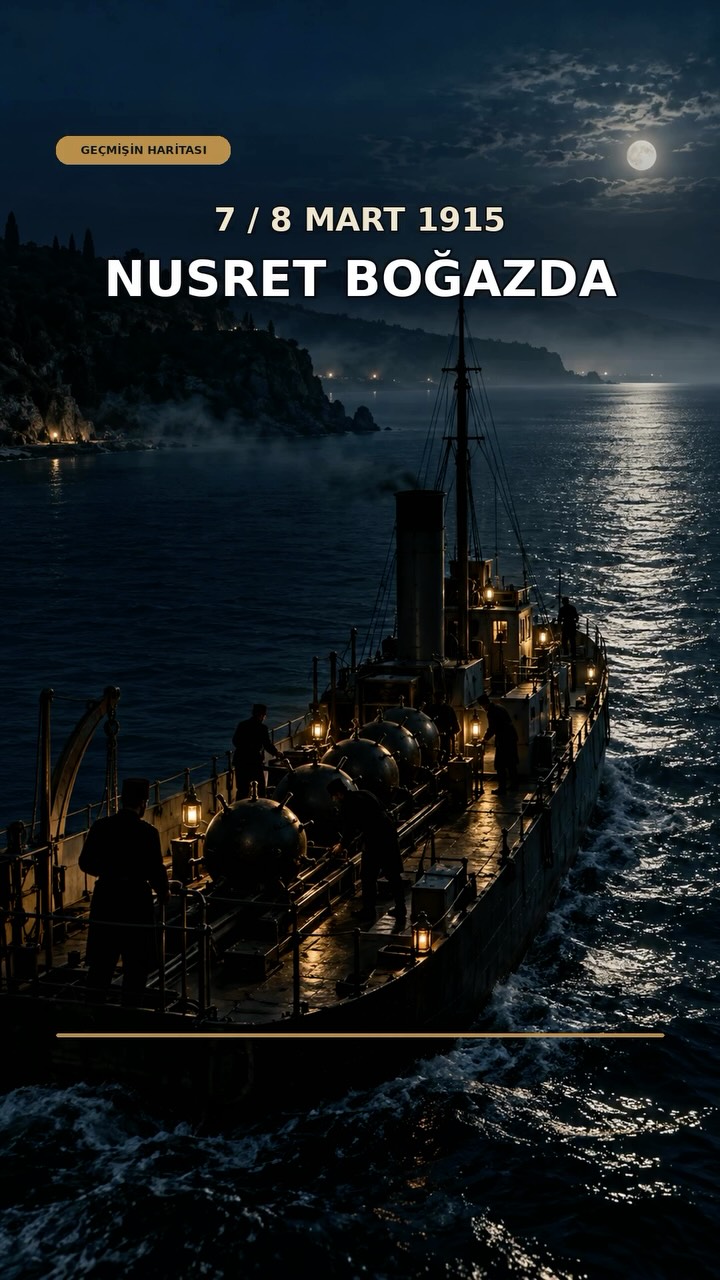
The subject is Nusret’s minelaying task during the night of 7–8 March 1915 and its role in the later naval battle. Read the minefields alongside the coastal batteries. The film’s historical scenes are illustrations; the daylight archival photograph is a separate kind of evidence. This guide is a summary, not a verified transcription of the spoken soundtrack.
Putting the night in its place
You cannot see a line drawn across the water. The horizon seems unchanged; the shore still holds its familiar shape. Yet an arrangement beneath the surface can transform the meaning of a passage. Begin Nusret’s story with that absence rather than with the silhouette of a great battleship. Some work becomes visible only through what happens later.
During the night of 7–8 March 1915, Nusret laid 26 mines in Erenköy Bay. The Gallipoli Historic Site Directorate’s account places the line parallel to the shore, where Allied warships had been observed manoeuvring. The minelaying and the naval battle on 18 March were separate events. Keep both dates in view: preparation has its own history before a dramatic outcome gives it a place in public memory. [1],[2]
A large ship, a small detail
In a painting of battle, the eye follows towering hulls and rising smoke. A mine offers no comparable spectacle. That makes it easy to overlook, or to turn into a single explanation for everything that followed. Both approaches narrow the story. The placement of a line mattered through its relationship with movement, observation and the defences around it. [2]
The directorate’s account brings the minefields and the coastal batteries into the same picture. Nusret’s work and the resistance of the shore defences are not competing stories. To follow one, we do not need to erase the other. When the film shows a deck or a mine, think beyond the frame: navigation, machinery, planning and watchkeeping also belonged to the task. A collective undertaking becomes clearer when the familiar heroic image is allowed to open onto a wider field of work. [2]
A photograph’s daylight, a narrative’s night
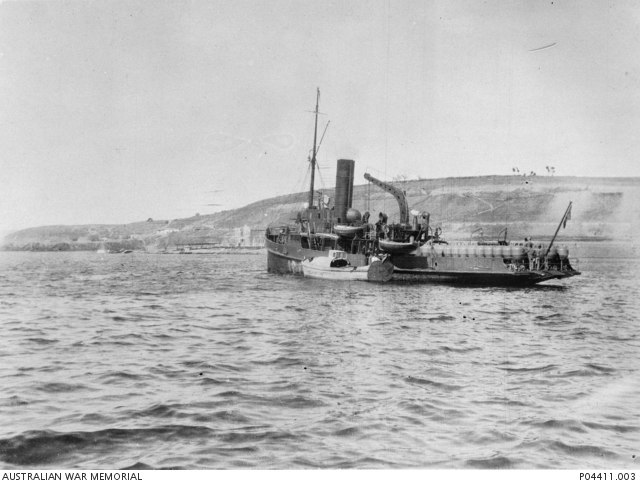
The historical photograph on this page helps us look at Nusret as a vessel. Its daylight also sets a limit. The Australian War Memorial identifies the image as dating from about 1915 and explicitly separates its visible cargo from the mines laid during the Erenköy night operation. We cannot make a photograph witness an event simply because it contains the ship we want to describe. [3]
Return now to the two dates. A task completed in darkness entered a much larger confrontation days later. The tension lies partly in that interval: an ordinary-looking stretch of water held a changed arrangement. The film offers an imaginative entrance; the dated account and the photograph offer different kinds of evidence. Leave with more than the number 26. Ask which kinds of preparation disappear when a complicated event is remembered through a single moment.
Four points in the story
- Night of 7–8 March 1915 · Nusret’s task laid 26 mines in Erenköy Bay. [1],[2]
- 18 March 1915 · The naval battle brought minefields and coastal batteries into a shared defensive setting. [2]
- About 1915 · The archive’s approximate date for the daylight photograph of Nusret. [3]
- Reading today · Distinguish the historical photograph from the film’s illustrative night scene.
Evidence, interpretation and legend
Two dates, two events
The minelaying task and the battle of 18 March did not happen on the same day. [1],[2]
A collective defence
The result should not be reduced to one ship or one person; coastal batteries and minefields belong in the same account. [2]
What a photograph can witness
The daylight view is not a direct image of the Erenköy night operation. The archive explicitly distinguishes the mines visible in the photograph from that task. [3]
Take a question with you
Which kinds of work that shape an outcome remain invisible in its best-known image?
Sources
- Gallipoli Historic Site Directorate · Nusrat commemoration, 8 March 2025 ↗
- Gallipoli Historic Site Directorate · Naval battles ↗
- Australian War Memorial · P04411.003 ↗
Original narrative: Geçmişin Haritası. Full English edition: 26 October 2026. These three official sources were reviewed directly. The commemoration article is dated 8 March 2025; it is not a current event listing. The existing Turkish page’s TÜBİTAK link could not be retrieved during this review, so the naval account cited here uses the directly reviewed Historic Site Directorate page.
Continue exploring
Seyit Onbaşı · English story ↗ · Orkhon · English ↗ · Reading Troy · English ↗
Back to the ten-story discovery ↗
Existing downloadable Nusret material is in Turkish. This English web story and original free worksheet do not represent a translated paid PDF. No new price or purchase listing is offered.