
One person’s effort, a shared defence
Seyit Onbaşı’s effort at Rumeli Mecidiye on 18 March 1915 became a powerful image of courage. The naval battle’s outcome also depended on coastal artillery, minefields and many people working together. Reading the story carefully means keeping the individual in view while following those wider connections.
01 / Start with the shore · Read a gun, a waterway and a commemorative arrangement.
02 / Follow the shell · Separate a remembered event, a later photograph and a film scene.
03 / Look outside the frame · Connect the minefields and the lives that continued after war.
Begin with the film, then return to the evidence
Open the original Instagram Reel ↗
Existing Turkish film, approximately 44 seconds. Historical scenes are illustrative reconstructions. No English dubbing or embedded English subtitles are provided. The existing file is unchanged; full playback and audio alignment have not been retested for this edition.
Three questions while watching
- Which people and tasks beyond the visible individual make defence possible?
- What can a photograph establish about the moment it shows?
- What does explaining a ship’s loss through a single shot leave out?
This is a subject guide, not a verified transcript of the soundtrack.
Looking at a battery from the sea
In a photograph of the shore, a gun barrel, stone walls and water sit quietly beside one another. Turn that peaceful view into the plan of an attack and their relationships change. For a ship, the water is a passage to cross; for a coastal gun crew, it is a line to hold. Rumeli Mecidiye is more than the setting for Seyit Onbaşı’s story. It helps us ask why his effort mattered at that particular place.
On 18 March 1915, the British and French fleet sought to overcome the Dardanelles defences. Its opponents were not simply other ships. Coastal batteries and minefields obstructed the passage. The Historic Site Directorate’s account presents artillery and mines as parts of the same defence. Even when we look closely at one shell, we need to keep the wider map in sight. [2]
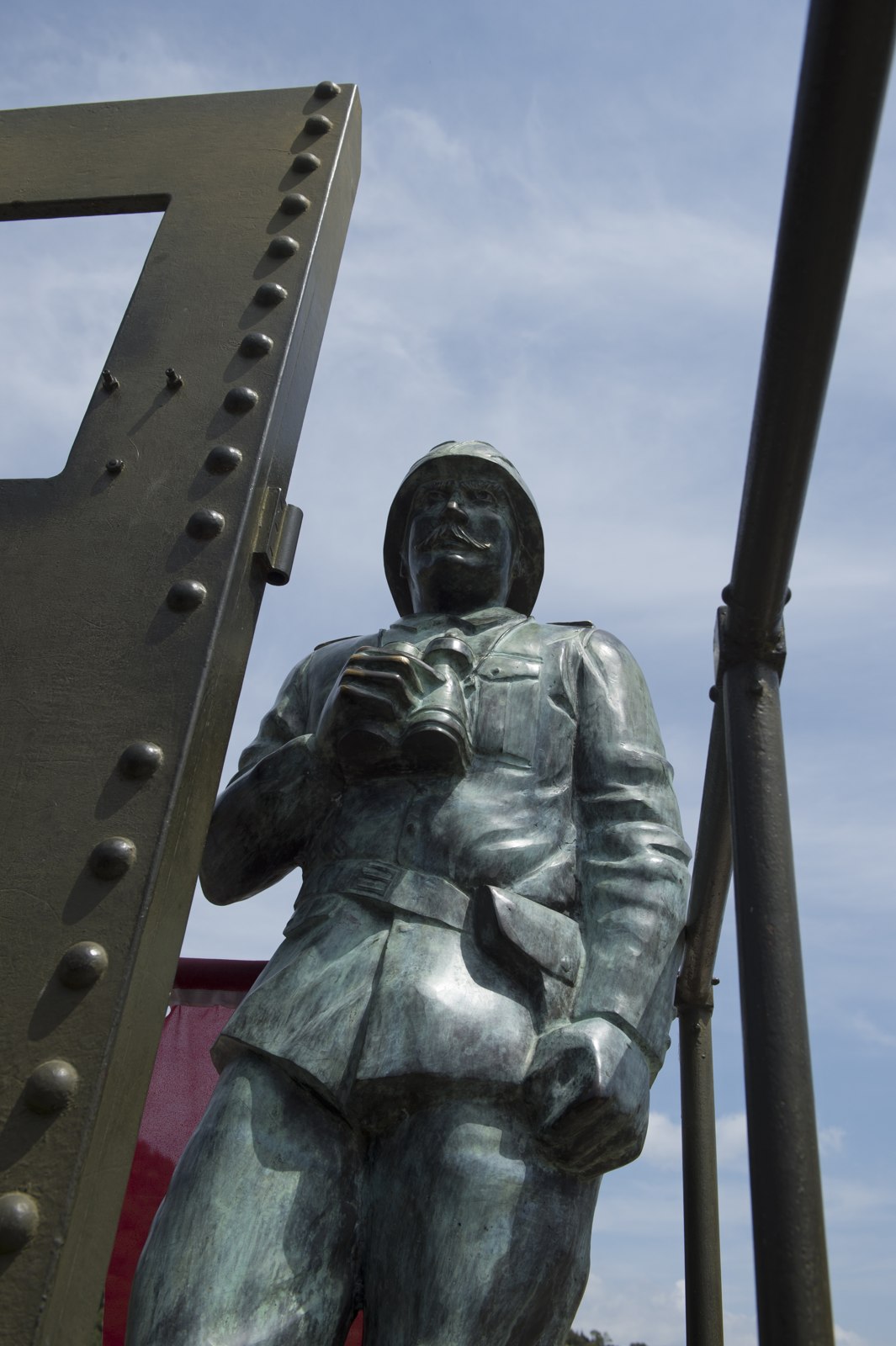
The displayed gun and statues in the photograph belong to a later commemorative arrangement. The camera was not present at Seyit’s wartime act. Standing beside a monument can make the past feel close, but physical proximity does not settle every historical detail. Finding a stone in the landscape and establishing which order was given at a particular moment are different kinds of investigation.
Try three questions while looking at the battery: which stretch of water is visible, where are the other elements of the defence, and which people are absent from the picture? A battlefield reduced to the spot where its hero stood can lose its lookouts, carriers and messengers. These questions invite us to notice work beyond the frame.
A question heavier than the shell
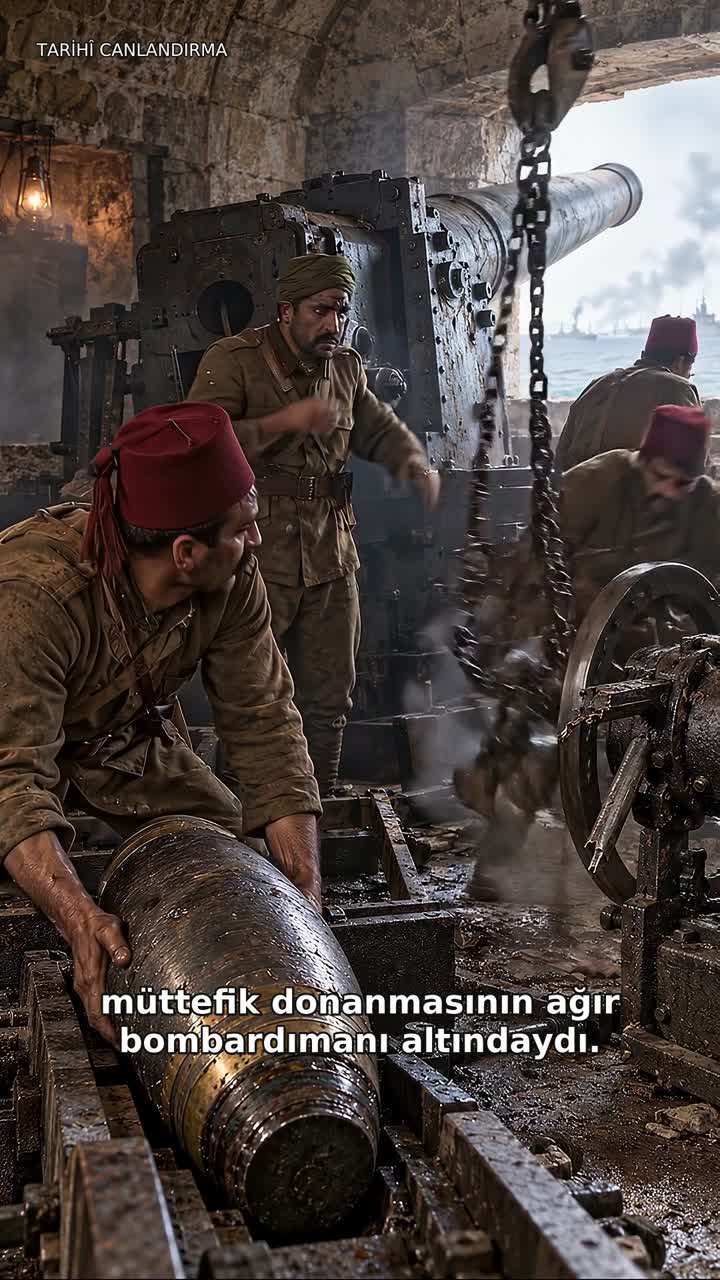
The remembered scene is vivid: a man carries a heavy shell on his back. Havran Municipality recounts that, with the gun’s lifting equipment damaged, Seyit asked his comrade Ali for help and brought ammunition to the gun. Its narrative also describes a wooden shell made for a later photograph. The carrying and the photograph are separate moments. [3]
We should not treat every sentence in this retrospective account as a battle report. The municipal page lets us study how local memory tells the story. Remembering an event, restaging it for a camera and depicting it in a film are distinct layers. Evidence for one does not automatically establish every detail of another.
Popular accounts give different weights for the shell. The municipality’s figure is not adopted here as an independently verified technical measurement. Establishing a precise weight would require identifying the gun, ammunition and recorded unit of measurement. This study has not completed that check against a primary ammunition document. A dramatic number cannot take the place of that work.
Care with such details does not diminish Seyit’s effort. Courage does not need certainty added to every element of its retelling. Respect also means handling a person’s story attentively. An expression or line of dialogue in a film cannot become a historical quotation without a supporting record. Ask whether you are seeing evidence of an event or a way of telling it.
The defence beneath the water
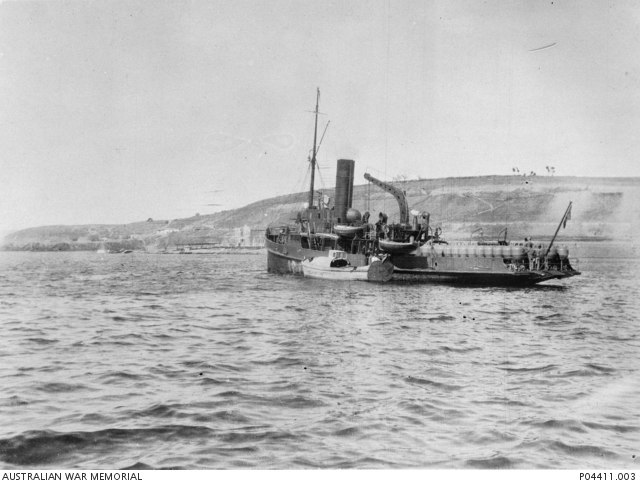
A scene of heroism makes movement visible. A mine is easier to overlook precisely because it remains out of sight. Nusret laid a line of 26 mines in Erenköy Bay during the night of 7–8 March 1915, across an area used by manoeuvring warships. Reading that obstacle together with coastal artillery gives us a fuller picture of the naval battle. [2],[4]
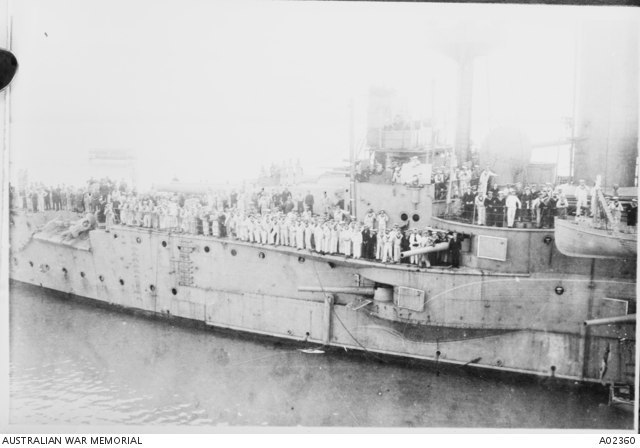
The Australian War Memorial’s Nusret record describes shellfire damage to Ocean’s steering and a mine strike at almost the same time. Its Ocean photograph record also attributes the ship’s loss on 18 March to mines. A single shot followed by an immediate sinking compresses this sequence too far. These records do not, on their own, identify a particular hit conclusively as Seyit’s. [4],[5]
The Nusret photograph reproduced here is a daylight view. Mines visible on its deck do not prove that it shows the Erenköy operation; the museum explicitly distinguishes them. An image may identify a vessel while showing a different moment from the event discussed beside it. Reading the caption is part of reading the evidence.
Return now to the film. Alongside the man carrying ammunition, imagine the submerged line and the crew who prepared it. Historical outcomes emerge from connected tasks. Recognising shared work preserves the individual’s courage while showing the relationships through which it became effective.
Returning to a village after war
End a story at the moment of victory and the rest of a person’s life disappears beyond the page. The Historic Site Directorate’s biography records Seyit’s birth in 1889 in Manastır village, Havran, his heavy-artillery service in the Dardanelles fortified command during 1914–1918, and his return home after discharge. It also records his livelihood making and selling charcoal. [1]
That return measures the distance between a film’s great moment and a long human life. Being visible in history does not mean that every day of a person’s existence received the same attention. Rather than treating the village as a closing scene, we can ask how work continued after war and how memory passed from family to wider society.
Seyit took the surname Çabuk in 1934 and died on 1 December 1939. The monuments at Rumeli Mecidiye commemorate him within the effort of the defenders. [1] A statue invites visitors to pause over an individual, but it is also a later choice about what to remember, not a frozen copy of the past.
Look at Ocean’s deck in the January 1915 photograph and people on the other side of the conflict enter the frame. It does not show the sinking on 18 March. Its presence here recalls that warships contained human lives too. Careful reading can keep a hero’s name without making other lives invisible. When we remember one moment, whose lives do we leave outside its story?
A life longer than one day
- 1889 · Seyit was born in Manastır village, Havran. [1]
- 1914 · The recorded start of heavy-artillery service in the Dardanelles fortified command; this is not presented as a verified date for all earlier military service. [1]
- 7–8 March 1915 · Nusret laid a line of 26 mines in Erenköy Bay. [2],[4]
- 18 March 1915 · The naval attack and Seyit’s effort at Rumeli Mecidiye; artillery and mine defences are read together. [2],[3]
- After service ended in 1918 · Discharge and return to his village. [1]
- 1934 · He took the surname Çabuk. [1]
- 1 December 1939 · Seyit Çabuk died. [1]
Evidence, legend and reconstruction
Documented historical setting
The naval attack of 18 March and the combined role of coastal artillery and minefields are supported by the cited accounts. That day did not end the entire Gallipoli campaign. [2],[4]
Local memory
The carrying of ammunition and Ali’s help are narrated by Havran Municipality. Retold dialogue is not treated as a verbatim battle record. [3]
A detail requiring further verification
No precise shell weight is asserted here. A primary ammunition record and identification of the gun and units would be needed.
A compressed heroic explanation
A single shot immediately sinking Ocean is not presented as established fact. Shellfire damage, a mine strike and the later loss must be distinguished. [4],[5]
What the photographs show
The 2014 battery photograph shows later commemoration; the archival photographs have their own dates and settings. None shows Seyit carrying a shell during the action.
Reconstruction and original interpretation
The film scenes are illustrative reconstructions. The questions about framing, memory and shared work are this story’s original interpretive layer.
From reading to your own investigation
Open the original free four-question discovery card ↗
The existing Turkish illustrated package describes four readings, exercises, sample answers, a bibliography and image credits. This English web edition and its new free worksheet do not translate that downloadable package. No new price or purchase listing is offered.
Sources and image credits
- Gallipoli Historic Site Directorate · Seyit Onbaşı monument and biography ↗
- Gallipoli Historic Site Directorate · Naval battles ↗
- Havran Municipality · Seyit Onbaşı: local account ↗
- Australian War Memorial · Nusret, P04411.003 ↗
- Australian War Memorial · Ocean, A02360 ↗
- Dosseman · Rumeli Mecidiye photograph, 24 May 2014 ↗

Original Geçmişin Haritası narrative; full English edition, 26 October 2026. Source and license records reviewed again for this edition. Local recollection, institutional history, archival images and original interpretation are distinguished. The CC BY-SA license applies to Dosseman’s photograph, not automatically to the original story text. No displayed image documents Seyit carrying ammunition during the battle.
Continue exploring
Nusret · English story ↗ · Ten-story discovery ↗ · All English stories ↗