

How does one person’s story echo through two sacred texts and centuries of art?
Short summary
From dedication in the Qur’an to the Gospel Annunciation; from a stone threshold in Selçuk to Byzantine icons: Mary’s story through faith, motherhood, courage and memory.
A journey beginning at a doorway
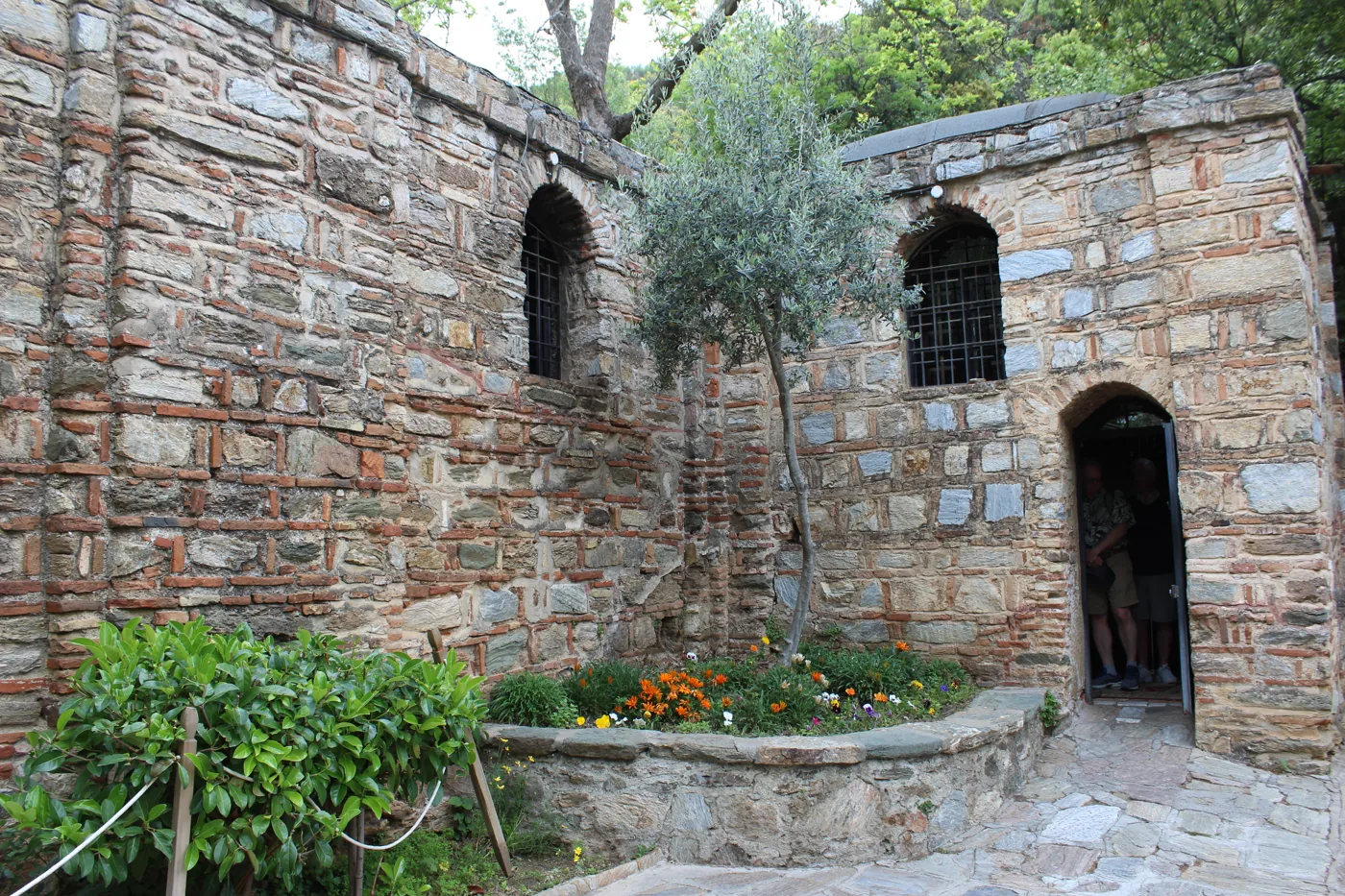
Among the trees on Mount Bülbül, near Selçuk in İzmir, stands a small stone doorway. Do not look for the scale of an imperial palace or the height of a cathedral. At the House of the Virgin Mary, another measure comes into view: how much space can one name occupy in the memories of different faiths? Our journey begins with that question. From here we will turn towards Nazareth, sacred texts and works of art preserved in different parts of the world.
To understand a place of visitation, looking at its walls is not enough. We must also listen to its stories, the sources behind them and the reverence accumulated over generations. The House of Mary is a place of worship and visitation today. Its connection with Mary’s residence belongs to a devotional tradition; historical research considers different accounts associated with Ephesus and Jerusalem. [1][2]
Think of this distinction as a compass rather than an obstacle. Stones open onto a material past, a sentence onto a world of belief, an artist’s line onto imagination. All three matter. The richness of Mary’s story comes from asking each its own question, rather than treating them as the same kind of evidence.
The Qur’anic beginning: a mother dedicates her child
The Qur’anic account begins before the birth scene, with a mother’s prayer. In Surah Al Imran, the wife of Imran dedicates the child she carries to God. When the child is born, she names her Maryam and prays for protection for her and her descendants. The narrative then describes Maryam’s acceptance, upbringing and care under Zechariah. Whenever he enters her place of devotion, he finds provision beside her; the encounter is associated with divine generosity. [12]
This is a powerful choice of beginning. Maryam is introduced through more than a birth: her own upbringing, worship and chosen status belong within the account. Verses 42–43 emphasise her being chosen, purified and called to worship. Verses 45–47 turn towards the announcement of Jesus’s birth. Childhood, devotion and motherhood become successive thresholds within one narrative. [12]
Keep that sequence on your reading table: dedication, care, announcement. If we know only the final scene, we miss what precedes it. Turning the pages slowly reveals a movement from her mother’s prayer to Maryam’s own question. This helps us consider why the reverence surrounding her cannot be explained through motherhood alone.
The Qur’anic announcement: Maryam asks a question
In Maryam 19:16–21, the scene changes. Maryam withdraws from her family towards an eastern place and places a screen between them. Confronted by a messenger appearing in human form, she first seeks refuge in the Most Merciful. On learning that he announces a child, she asks how this can happen when no man has touched her. The answer concerns God’s power and the child’s significance as a sign and mercy for people. [13]
Do not read the scene merely as a picture of astonishment. Her setting a boundary, seeking protection and asking a question give the account its movement. There is an encounter, then a question and answer. Listen to the sequence of voices: who speaks, and to whom? A painting or film may interpret this scene, but a face, costume or building absent from the text cannot be presented as historical certainty.
For this reading, the strongest image preserves the space opened by that question instead of filling every unspoken detail. An unexpected future appears before a person. At the centre stands Maryam, hearing and responding. This is also a threshold through which the reader can approach the text.
Beneath the palm: from solitude to return
As the birth approaches, the Qur’anic account becomes strikingly tangible: withdrawal, labour, a palm tree, water and food. In Maryam 19:22–26, solitude and consolation draw close. Maryam is instructed to shake the tree, eat, drink and take comfort. She then returns to her people carrying the child. The privacy of childbirth is followed by an encounter with the community’s gaze. [4][14]
In verses 29–33, she points towards the child. Within the narrative, he speaks of being God’s servant and prophet, charged with worship and kindness towards his mother. Listen closely to that final emphasis: respect for a mother sits within a major theological declaration. It is one reason Maryam cannot simply be read as a figure on the margins. [15]
Treating the water as mere scenery and the dates as mere vegetation would diminish the account’s sensory force. Automatically connecting them to water at a modern shrine would be another mistake. Consolation in a sacred narrative and a health claim about a present-day object are different matters. First, the story invites us to follow its traces of solitude, care and a return to the community.
The Gospel announcement and a meeting between women
In Luke 1:26–38, the announcement takes place in Nazareth. Gabriel addresses Mary, who is betrothed to Joseph. She considers the greeting, asks about the birth and responds by describing herself as God’s servant. Read beside the Qur’an, this passage offers a comparable scene of questioning while explaining Jesus’s identity through a different theological language. [3]
Luke continues. In 1:39–56, Mary visits Elizabeth: an announcement leads to a meeting between two women. This passage also contains Mary’s song of praise, known as the Magnificat. Its language of reversal brings the powerful and the humble, the hungry and the wealthy into view. [3]
Mary’s voice is therefore more than a voice receiving what others say about her. In Luke’s narrative she answers, travels, encounters another person and expresses praise. Follow that movement in your mind. The route from an encounter inside one home to another home gives the story both intimacy and breadth. It grows around a visit and a greeting as well as an extraordinary announcement.
Bethlehem: remembered words, a growing child
Luke 2 tells of Mary and Joseph’s journey, the birth in Bethlehem and the child laid in a manger. Shepherds arrive; Mary is shown keeping these events and reflecting on them in her heart. This slowing of the narrative matters. Amid movement around her, there is also the work of dwelling on what has happened. [16]
The chapter includes the presentation in Jerusalem, Simeon’s words of sorrow to Mary and the finding of twelve-year-old Jesus in the Temple. Mary and Joseph search for him and express their anxiety when they find him. Motherhood extends beyond an infancy scene: caring, searching, trying to understand and not immediately resolving every answer. [16]
Before a Nativity painting, it is easy to focus only on angels or gold. Returning to the text also reveals swaddling cloths, a manger and a mother thinking. Look at the artworks here with that attention. Which detail has the artist enlarged, and which has receded? How does the image’s first emotional impression accompany the time unfolding within the text?
Matthew’s road: travelling to protect a child
Matthew 2:13–23 foregrounds another journey. Warned in a dream, Joseph takes the child and his mother to Egypt. The account moves through danger, protection, return and settlement in Nazareth. We should not automatically carry Luke’s shepherds or the palm of Surah Maryam into this scene. Each narrative speaks through its own focus. [17]
Here Mary’s story is not confined to the safety of a house. Travelling with a child, leaving a familiar place and moving towards uncertainty also belong to her presence in the narrative. No invented speech needs to be added. The movement supplied by the text is already powerful: rising at night, protecting a child and changing course.
Placing the Gospels beside one another does not require constructing a seamless itinerary by forcing their gaps closed. We can follow what different scenes emphasise. Remembered words come forward in one; a protective journey in another. These different emphases offer fruitful starting points for understanding Mary’s breadth within cultural memory.
From Cana to the cross: the account does not end at birth
In John 2, Jesus’s mother notices a shortage at the wedding in Cana and tells the servants to do what he instructs. John refers to her through her relationship to Jesus, without using her personal name. Looking only for the name Mary is therefore not enough when tracing her presence. [18]
In John 19:25–27, Jesus’s mother and other women stand beside the cross. Jesus establishes a relationship of care between his mother and the disciple he loves; the disciple takes her into his home. The passage does not identify that home as being in Ephesus. Acts 1:14 shows Mary again within a community gathered in prayer. [11][19]
Birth, wedding, grief, community: write those four words beside one another. They help us sense why Christian art does not confine Mary to a single pose. Some works enlarge the hands holding a child; others explore an encounter or mourning. Each opens another way of considering the same person. In the Gospel accounts, motherhood can be read through relationships changing over time as well as a moment of beginning.
Shared reverence, distinct languages of belief
In Islam, Maryam is honoured for her chosen status and chastity; Jesus is God’s servant and prophet. In Catholic teaching, the title Theotokos, Mother of God, belongs to teaching about Jesus’s identity. It does not mean that Mary is a goddess. An account of shared reverence must leave each language of belief within its own context. [2][5][15]
Christianity is not uniform either. Orthodox icon traditions, Catholic Marian teaching and the approaches of different Protestant communities are not expressed identically in every respect. Here a Catholic institution’s explanation is attributed to that institution. An artwork’s existence does not establish a universal Christian devotional practice.
The Catholic declaration Nostra aetate, dated 28 October 1965, specifically mentions Muslim reverence for Mary. This documentary point of encounter matters. [6] Respecting together does not require translating every concept into an identical meaning. Careful reading can hold proximity and difference at once. The value of speaking Mary’s name at a shared table lies in preserving that openness.
Two stops in Selçuk: the church and the mountain house
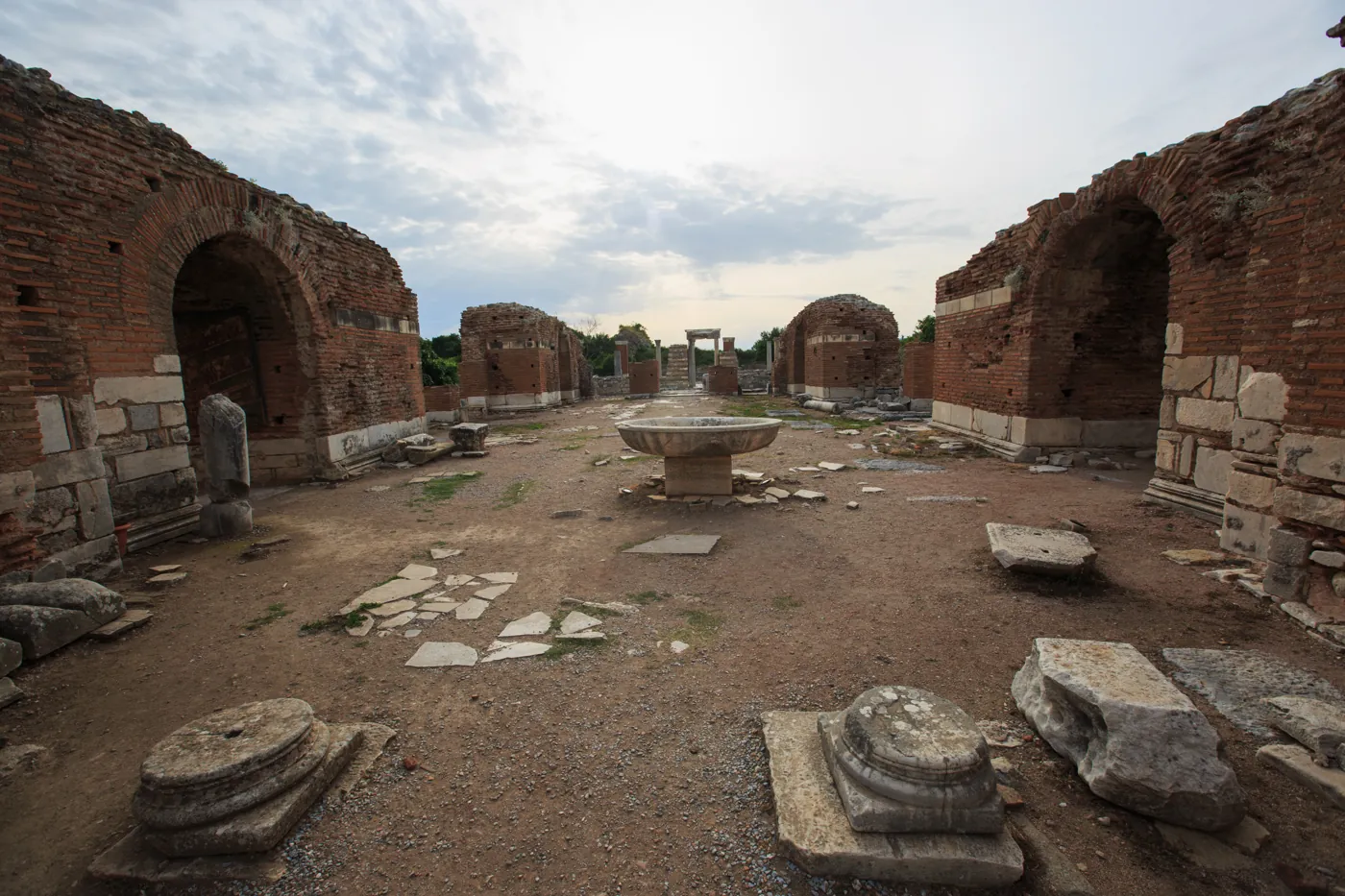
Look at the stones of the Church of Mary in ancient Ephesus. This is a different space from the mountain house’s small doorway: fragments of columns, a long worship space and surviving walls. The Council of Ephesus in 431 was an important moment in Christian debates about Mary’s title and Jesus’s identity. Türkiye’s Culture Portal associates the council with the ancient city’s Church of Mary. [20]
The House of Mary on Mount Bülbül is a separate place of visitation. Its nineteenth-century tradition, particularly the investigations of 1891, matters here. Combining house and church because of their shared name would obscure both geography and history. TDV’s discussion of Ephesus and Jerusalem traditions makes the limits of the sources visible without forcing a single certain conclusion. [1][2]
On 29 November 2006, Benedict XVI celebrated Mass outside the house; the dated Vatican text records the occasion. [10] Read it as a documented moment in the history of visitation, rather than proof of a first-century residence. A useful signpost between the photographs is simple: the church in the ancient city and the house on the mountain are different places. One name, different historical layers.
Mary across the world: gold, faces, hands and stone
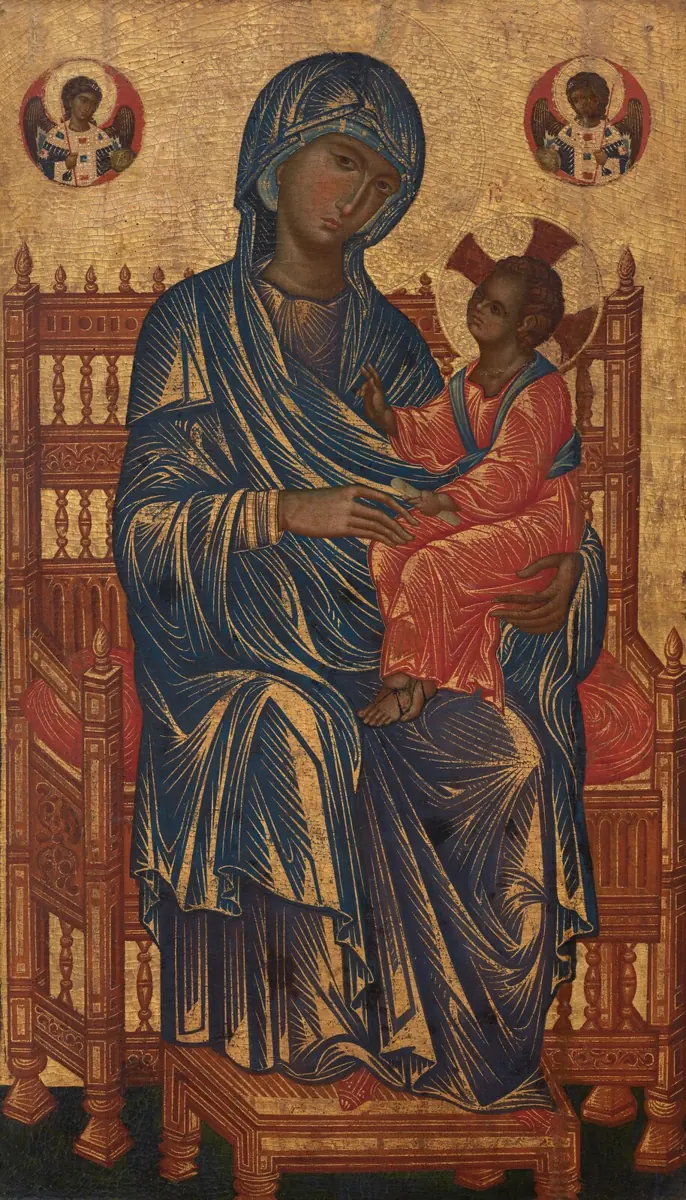
The gold background of a Byzantine icon can lift its subject out of an everyday setting. Look at the National Gallery of Art’s Enthroned Madonna and Child, dated approximately 1250–1275. The throne, the golden lines of the clothing and the hand indicating the child establish its religious visual language. The museum relates the composition to the Hodegetria, the Virgin who shows the way. [22]
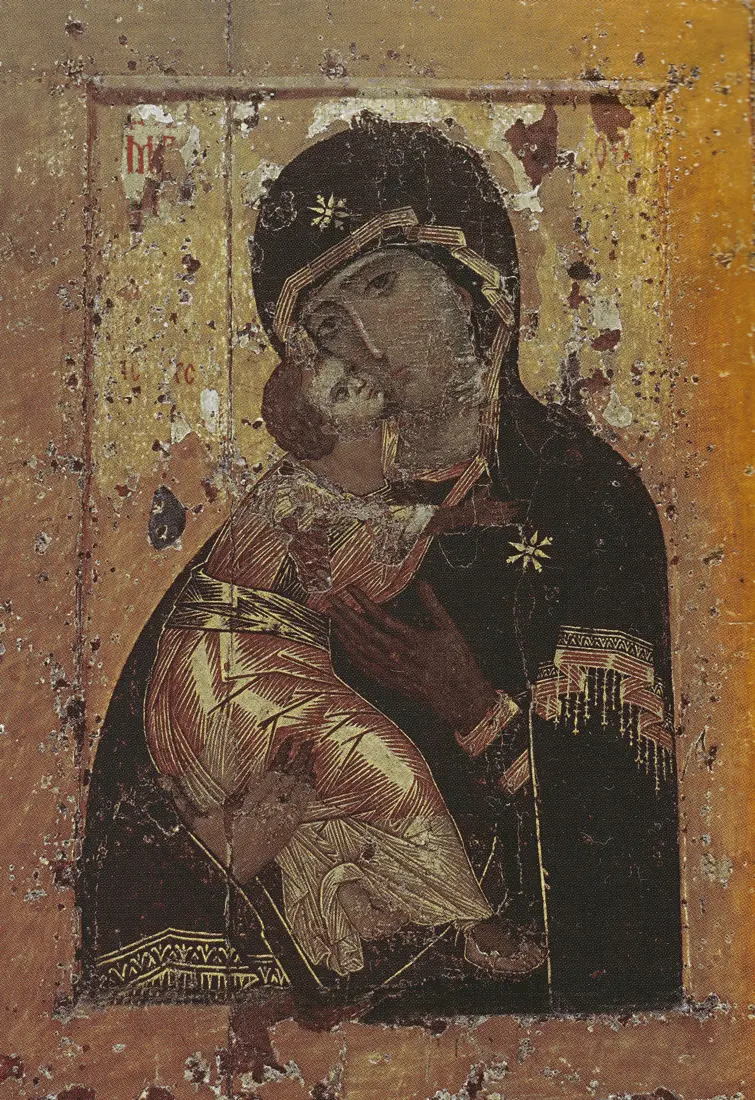
In the Virgin of Vladimir, notice the cheek approaching the child. The Tretyakov Gallery describes the work as an important Byzantine icon from the first third of the twelfth century. Abrasion and losses are visible traces of an image carried through time. Compare its form of contact with another icon: how do the gaze, hand and distance between faces change? [24][25]
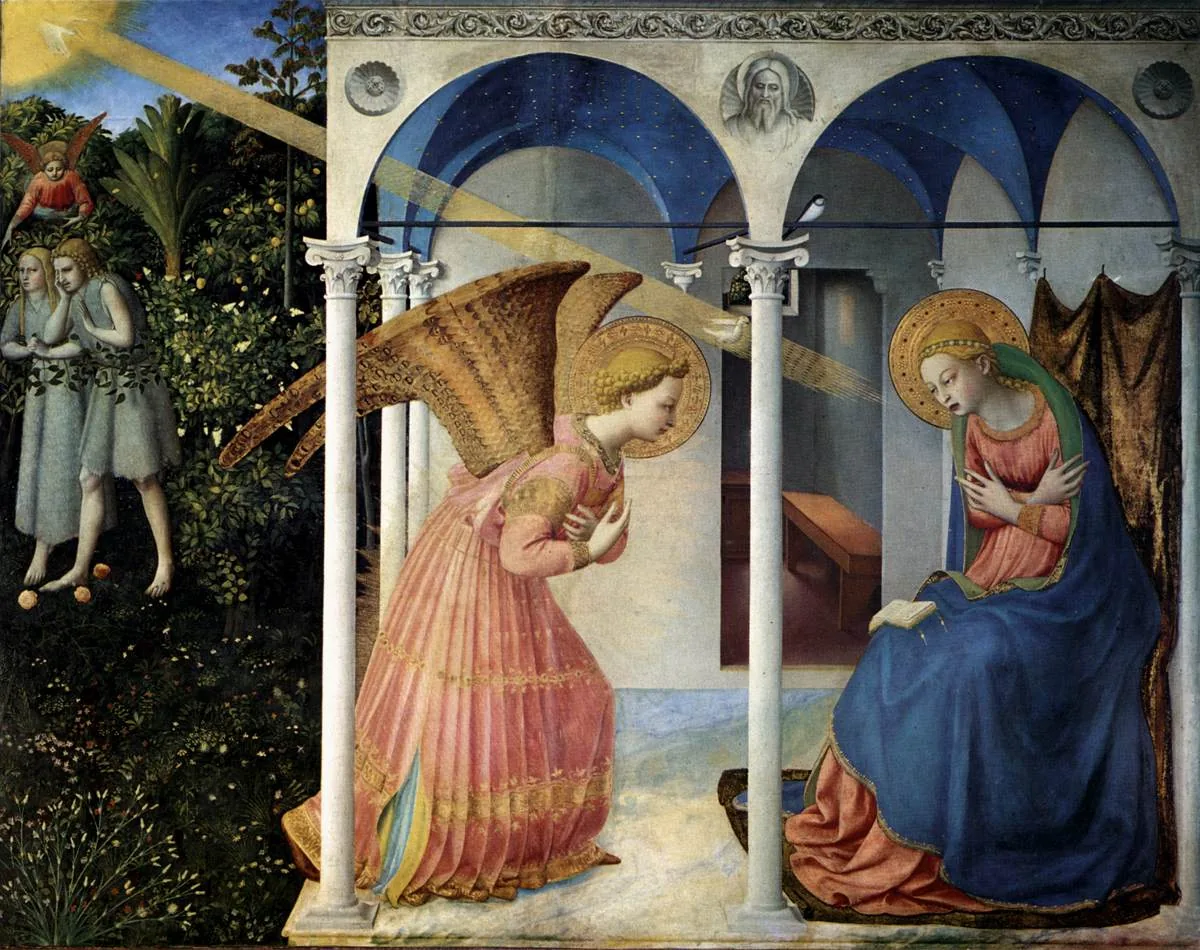
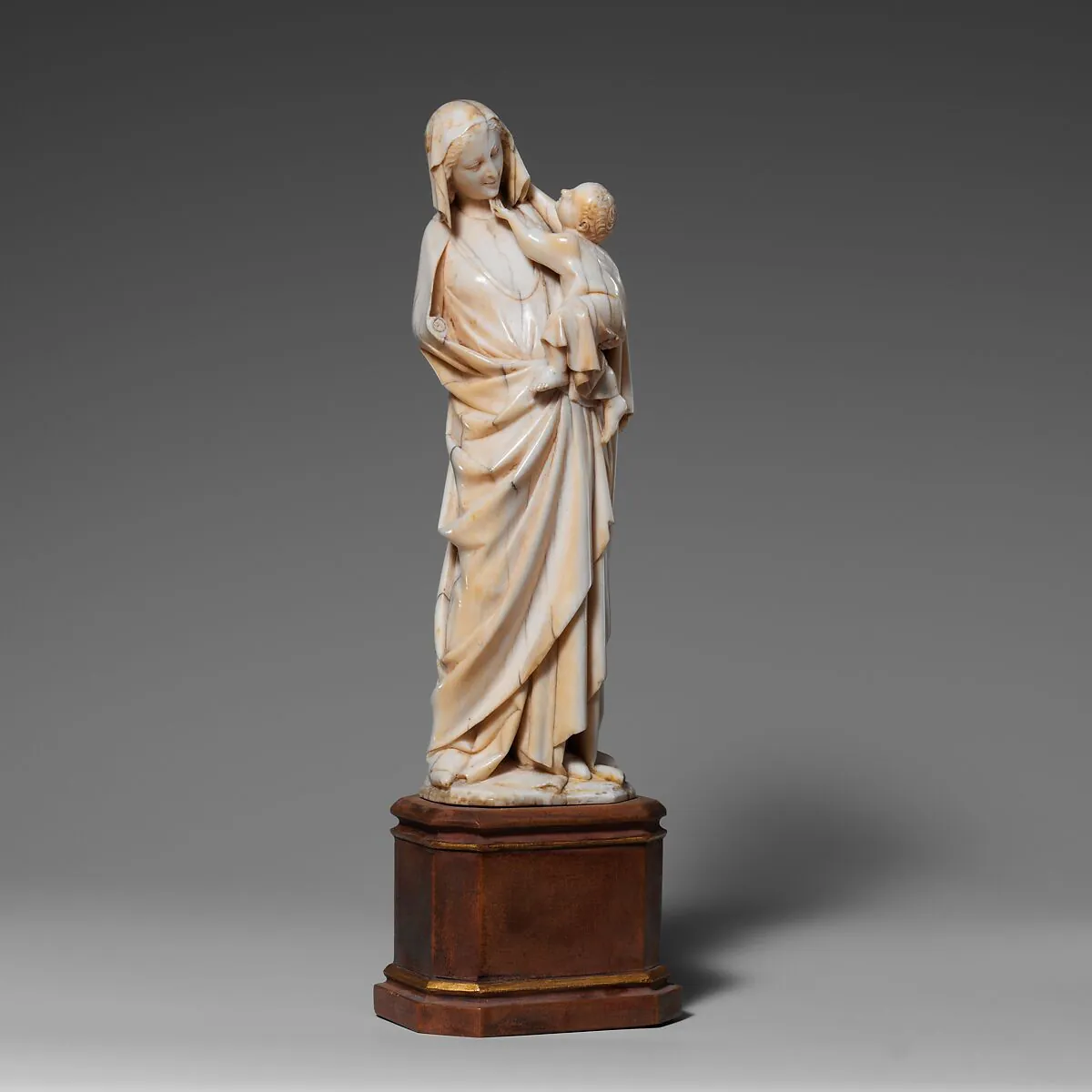
Fra Angelico’s fifteenth-century Annunciation changes the scene again. Architecture orders the space between the angel and Mary; a textual encounter becomes posture and setting. [7] A small ivory Virgin and Child, made in Paris around 1260–1270 and now in The Met’s collection, presents the relationship in three dimensions. Its recorded height without the base is just 14.6 centimetres. Despite that small scale, the head’s inclination towards the child invites close attention. [23]
This selection is a starting point for comparing visual languages, not a complete world inventory. None of these works is presented as an authenticated portrait made during Mary’s lifetime. Ask instead how artists in different centuries made motherhood, proximity and holiness visible through materials. Moving from Selçuk’s stone building to these works reveals a memory too extensive to fit a single image.
Returning to the threshold: which question comes with us?
Return to the doorway at the journey’s beginning. You now see more than a building. You remember dedication, announcement and the palm in the Qur’an; encounter and reflection in Luke; care in John; hands and gazes within artworks. These do not replace one another. Reading them together makes the breadth of Mary’s presence within memory apparent.
You need not leave with one certain face or an exhaustive travel map. Something more valuable may accompany you: the habit of approaching a text, a belief and an artwork attentively. Describe what you see, listen to what a source says and identify your own interpretation as your own. Shared respect becomes the practical work of reading.
Open the discovery card and begin with one sentence: which scene in Mary’s story made me pause? Then write its source. One reader may choose the solitude of birth, another the encounter with Elizabeth, another the inclination of a cheek in an icon. We can approach the same name with care without giving the same answer.
Open the texts side by side.
This guide helps locate related scenes. It does not equate teachings or suggest that every detail occurs in both accounts.
| Scene | Qur’anic reading | Gospels and New Testament reading |
|---|---|---|
| Beginning | Al Imran 3:35–37: dedication, upbringing and Zechariah’s care. [12] | Luke 1:26–38: the announcement in Nazareth. [3] |
| Announcement | Maryam 19:16–21: the messenger and the question. [13] | Luke 1:26–38: Gabriel’s message and Mary’s response. [3] |
| Birth | Maryam 19:22–33: the palm, the return and the speaking child. [4][14][15] | Luke 2:1–20: Bethlehem, manger and shepherds. [16] |
| Further scenes | Al Imran 3:42–47: chosen status and the announcement of Jesus. [12] | John 2 and 19:25–27; Acts 1:14: wedding, care and community. [18][11][19] |
Timeline
- Within the sacred narratives
Qur’an: Al Imran 3:35–47 and Maryam 19:16–34. New Testament: Luke 1–2, Matthew 2, John 2 and 19. No exact birth or death date is invented. [3][4][12][16][17][18]
- 431
Council of Ephesus. Distinguish the ancient Church of Mary from the house on the mountain. [5][9]
- First third of the twelfth century
The Tretyakov Gallery’s dating of the Byzantine Virgin of Vladimir. [25]
- Approximately 1250–1275 / 1260–1270
Separate production dates for the NGA’s Byzantine panel and The Met’s small Parisian sculpture. [22][23]
- Nineteenth century / 1891
Investigations linking the mountain site with accounts associated with Emmerich. The final residence is not presented as historically certain. [1][2]
- 28 October 1965
Nostra aetate acknowledges Muslim reverence for Mary. [6]
- 29 November 2006
Benedict XVI celebrates Mass outside the House of Mary, documented by the Vatican. [10]
- 20 May 2016 / 10 May 2023
Dates of the photographs of the ancient Church of Mary and the mountain house used here. [8][21]
Evidence, belief and interpretation
Is residence in the house certain?
This page makes no such claim. It distinguishes Ephesus and Jerusalem traditions from modern visitation records and material evidence. [2]
Do the two faiths teach exactly the same thing?
No. Shared reverence does not make their accounts of Jesus’s identity or Marian theological titles identical. [5][6]
Does a visit prove that water heals?
Devotional traditions are not medical evidence. No health outcome is attributed here to water or ritual.
Is the painting Mary’s real portrait?
No. Fra Angelico’s work is a later religious interpretation, not a contemporary portrait or record of the event. [7]
A page for your own reading
Open the free six-question discovery card ↗
This English web worksheet is free. No paid PDF translation or new product offer is supplied.
Sources and further reading
- Culture Portal · House of the Virgin Mary
- Ömer Faruk Harman · Maryam · TDV
- Luke 1:26–56 · USCCB
- Diyanet · Surah Maryam, introduction and narrative
- Catholic Catechism · 484–511, especially 495
- Nostra aetate · 28 October 1965, section 3
- Fra Angelico · Annunciation detail · image and rights
- Storyteller23 · house photograph · 10 May 2023
- UNESCO · Ephesus
- Benedict XVI · Ephesus homily · 29 November 2006
- John 19:26–27 · USCCB
- Diyanet · Al Imran 3:35–47 · official Turkish translation PDF
- Diyanet · Maryam 19:16–21
- Diyanet · Maryam 19:24–27
- Diyanet · Maryam 19:29–33
- Luke 2:1–52 · USCCB
- Matthew 2:13–23 · USCCB
- John 2:1–12 · USCCB
- Acts 1:14 · USCCB
- Culture Portal · Ephesus and the Church of Mary
- Marmaracalypso · Church of Mary photograph · CC BY-SA 4.0
- National Gallery of Art · Enthroned Madonna and Child
- The Met · Virgin and Child · Paris, approximately 1260–1270
- Wikimedia · Virgin of Vladimir · image and public-domain record
- Tretyakov Gallery · the Byzantine Virgin of Vladimir
- National Gallery of Art · open-access / CC0 policy
English edition: 25 October 2026, adapted from the complete expanded Turkish story. Sacred narratives are paraphrased with surah/verse and book/chapter references. Belief statements are attributed to their traditions; no invented sacred dialogue is used. Diyanet sources remain in Turkish. Dynamic institutional pages can vary in accessibility. This selection is not an exhaustive inventory of religious traditions or world art.