
Summary
Chariots, political crowds and Ottoman celebrations: read Sultanahmet through the monuments that remain and the space that has disappeared.
Choose your way in
Stones in the middle, a missing circuit
In Sultanahmet, it is easy to photograph the tall monuments one by one. You stop before one, then move to the next. Try including the space between them in your picture. A different question appears: why are these objects here, and why do they stand in a line? The Hippodrome is a story about surviving things, but also about a great expanse that the eye can no longer see as a whole.
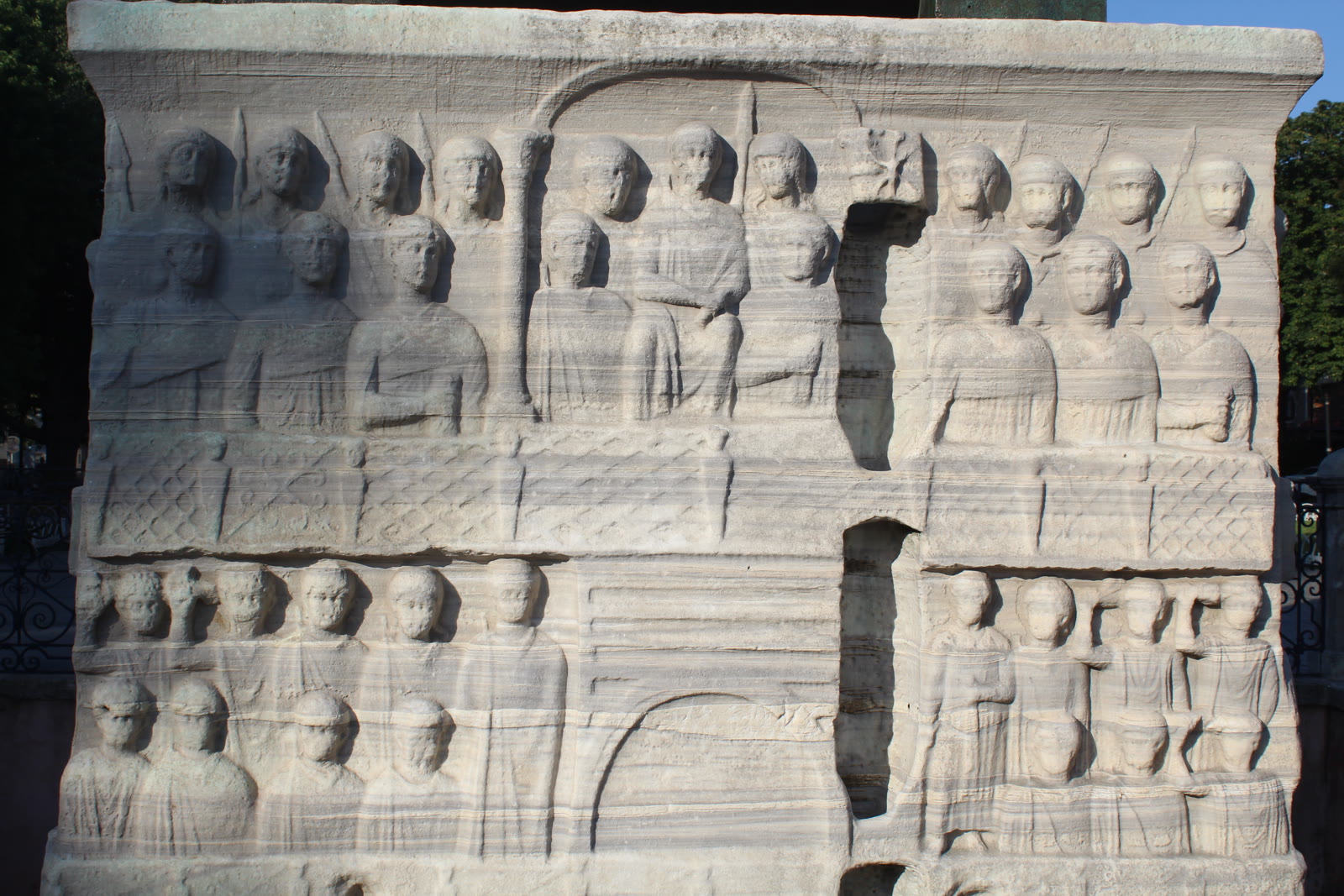
The racecourse begun in the Roman period became a political meeting place in the Byzantine capital. Its central monuments belong to the organisation of chariot racing. The obelisk brought from Egypt and the Serpent Column from Delphi remind us that this square did not emerge from a single place or moment. An empire assembled objects from different geographies in its capital. [1] The real photograph at the opening brings you close to a carved surface: look at the arrangement of figures before imagining the wider arena.
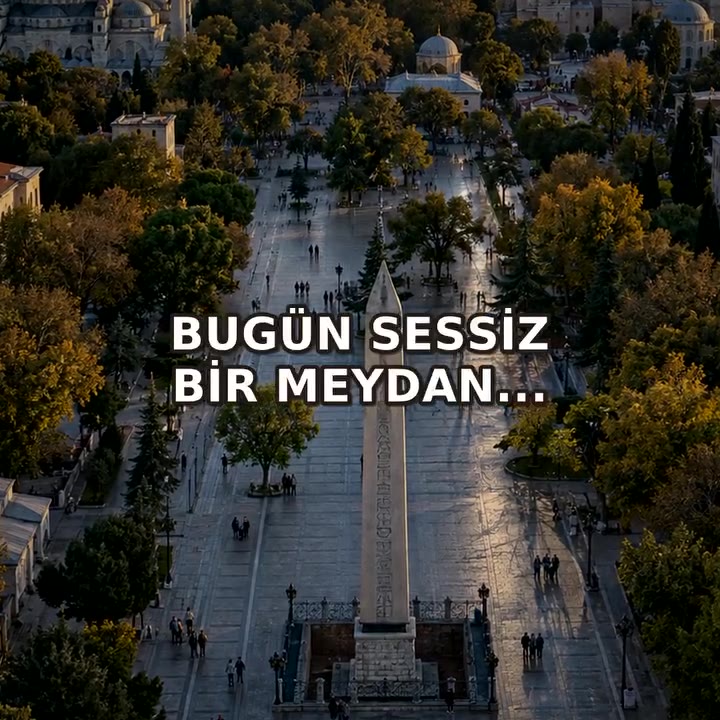
When the race ends, the crowd remains
Imagine thousands of people facing the same direction at a race. Winning may not be the only thing on their minds. A crowd on this scale can become a stage on which rulers and subjects see one another. The Hippodrome's historical importance prevents sport and politics from being shut into separate rooms. The rhythm of competition met the other tensions of the city. [1]
Yet carrying every habit of a modern football stadium into this space would mislead us. An analogy can open a question; it cannot make institutions from different centuries identical. Watch the film for the arrangement of the setting as well as the speed of the chariots. The visibility of the ruler, the gathering places of spectators and the proximity of the palace offer starting points for understanding the square's influence. These are questions to investigate, rather than a claim that every detail of the film reconstructs the historical site.
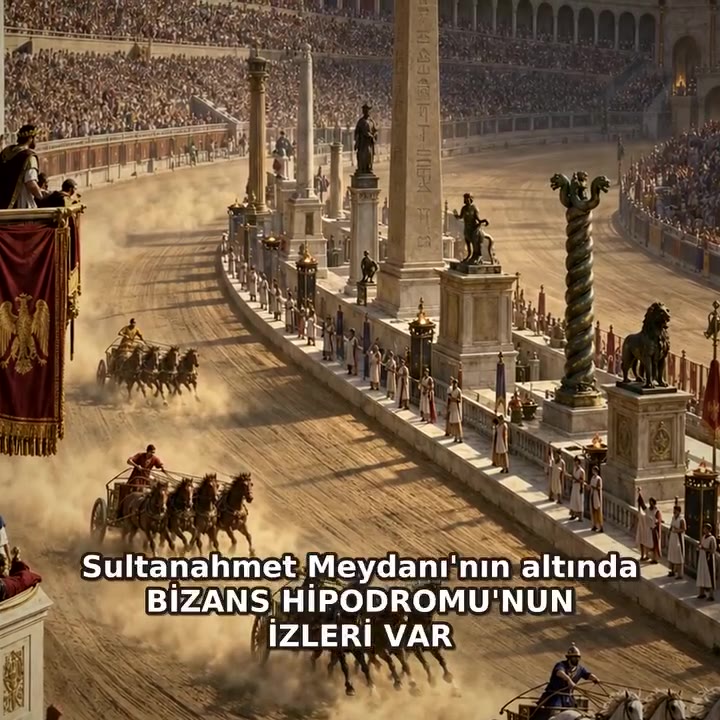
Another celebration in the same place
Under the Ottoman name Atmeydanı, the area remained part of city life through new spectacles and ceremonies. Accounts of weddings and guild processions discussed by Tanju Cantay show how the former racecourse continued to generate crowds. It did not freeze into the remains of one empire. As its surroundings and uses changed, so did its meaning. [1]
Do not place today's Sultanahmet skyline unchanged above a Roman race. A building behind a monument in a photograph may belong to a much later century. The nearby İbrahim Pasha Palace offers a further step: the official museum account records that the Museum of Turkish and Islamic Arts moved into it in 1983. [2] A palace becoming a museum adds another layer to the square's history. Look back once more. What makes this place compelling is the encounter of different periods, rather than the complete survival of one scene. If you continue to the Basilica Cistern, the city's water memory waits beneath the crowds.
Timeline
- Roman period: construction begins under Septimius Severus, whose reign was 193–211. [1]
- Byzantine capital: chariot racing, public gatherings and political events share the setting. [1]
- Ottoman period: Atmeydanı hosts celebrations and ceremonies while the surrounding buildings change. [1]
- Today: monuments and the shape of the area allow fragments of a lost whole to be read.
Evidence, interpretation and legend
The journey of the stones
The obelisk and the Serpent Column came from Egypt and Delphi respectively. Their different origins are documented. [1]
Many dates in one view
The square as it appears today does not belong to a single historical period.
The limits of reconstruction
The film illustrates a historical story. Its stands and crowds are not archival footage or a measured archaeological reconstruction.
A question to take with you
Should we read a square through its surviving monuments, or through the spaces that have disappeared?
Free Hippodrome discovery card ↗Film in Turkish
The existing film is in Turkish, including its lettering. No English voiceover or subtitles have been added. It accompanies the story as an illustrative reconstruction.
Sources
- Tanju Cantay · Atmeydanı · TDV İslâm Ansiklopedisi (1991)
- Ministry of Culture and Tourism · Museum of Turkish and Islamic Arts · palace and museum history
Complete adapted English edition of the Geçmişin Haritası Turkish web story; all three chapters and accompanying sections included. Sources checked 25 October 2026.
Reading files and delivery language
The existing free PDF sample is in Turkish. The separate English card above is an original free worksheet, not a translation of the complete product. The Turkish page describes a 12-page illustrated PDF, three printable exercises, source notes and an offline reader; no purchase link is currently provided there. Those delivery files and their English translation have not been verified here.
Open the existing Turkish PDF sample ↗