
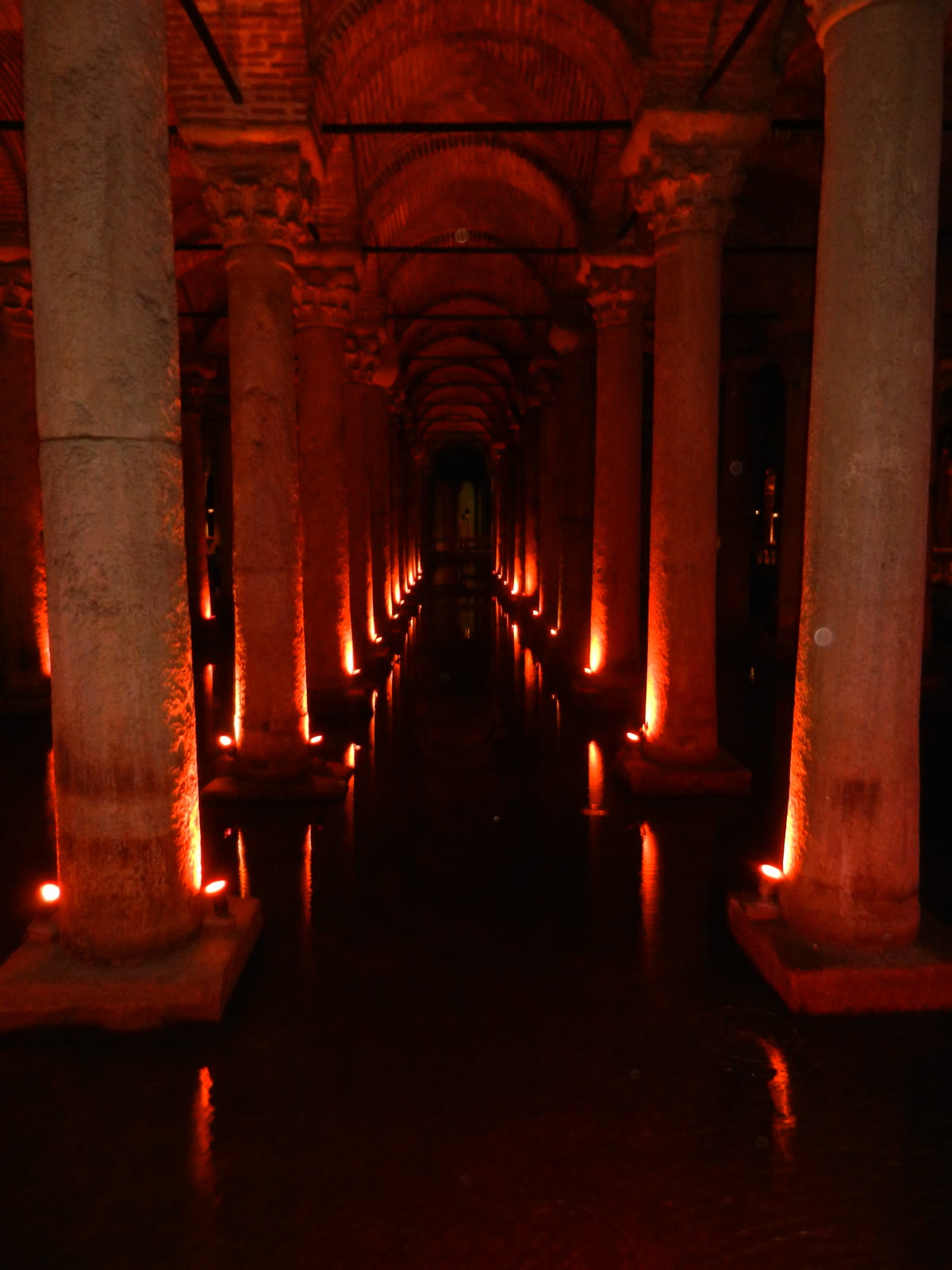
Summary
While life continued above, water waited below. Follow the cistern from columns and reused stones to the wider network and the changing seasons.
Pause among the columns before hurrying to Medusa.
One step, two Istanbuls
Imagine descending from the crowds of Sultanahmet. A few moments ago you were looking towards the sky; now your gaze catches columns multiplied across water. The city has not changed. The layer through which you look at it has. This is the first surprise of the Basilica Cistern: beneath a magnificent square, a building made for a practical purpose can become an extraordinary space.
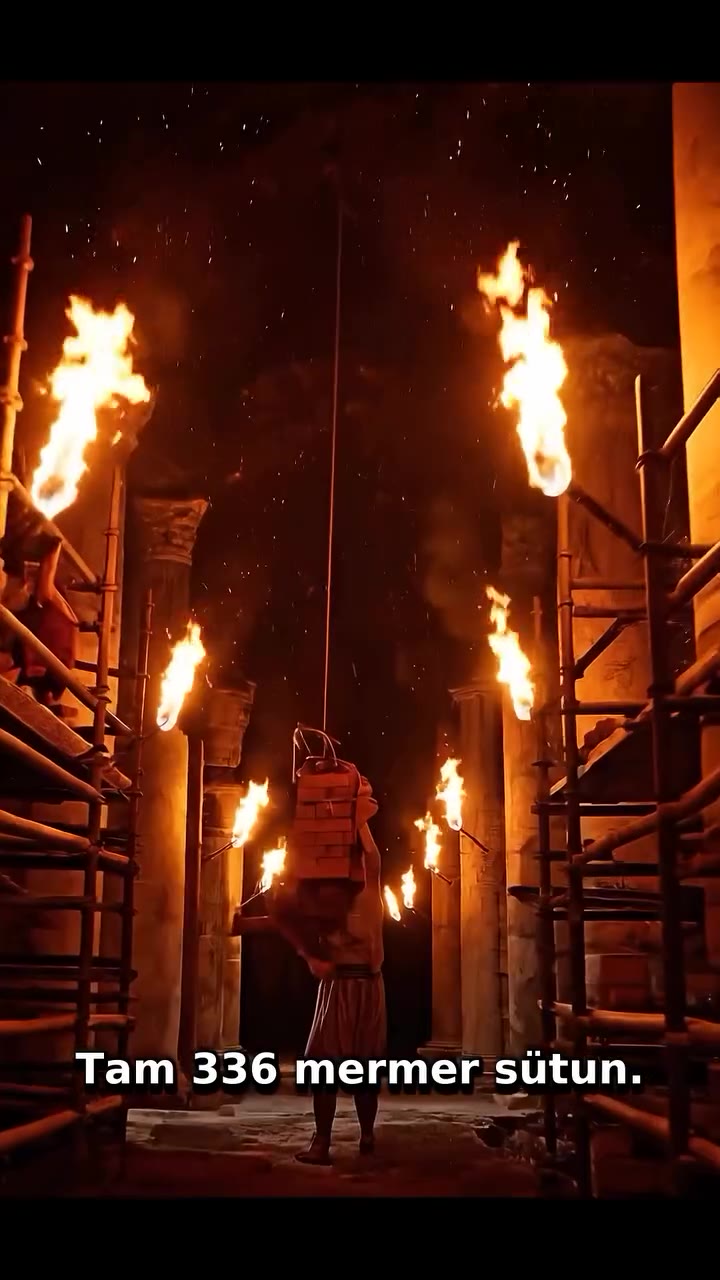
Built during Justinian’s reign in the sixth century, the cistern served the water needs of the Great Palace and its surroundings. Its 336 columns are not isolated sculptures: they form a system supporting the great covering overhead. [1][2] Begin counting them and another skill appears behind the spectacle. A city must collect water, keep it and distribute it when needed if everyday life is to continue.
Before you reach Medusa
The two best-known faces in the cistern are the Medusa heads used as column bases. One is upside down and the other lies on its side. Their unusual placement has generated many explanations. A well-told legend, however, is not a verified explanation. The tangible relationship is the reuse of the heads within a supporting structure. Look beyond the faces to the columns rising above them. [1][2]
Spolia means material given a new task in another building. Seen this way, the cistern gathers traces of earlier structures as well as water. Walk without assuming that every column belongs to the same place, time or maker, and the room becomes richer. A capital, a surface or a joint can open onto different pasts within a single dark hall.
Even the darkness we see changes
The Basilica Cistern we experience has not passed untouched through the centuries. Cleaning, repair, strengthening, walkways and lighting have shaped the space seen by visitors. The municipal restoration account describes these interventions; the operator’s July 2022 announcement records the reopening after the works. [1][5] Rather than mistaking the colours of modern lighting for an everyday Byzantine scene, consider how heritage is experienced in the present.
When you emerge, the same square may look slightly different. A city’s history consists of more than rulers and monuments. Even the grandest palace cannot function normally without water. Beyond the encounter with Medusa, the cistern makes invisible infrastructure visible. Continue to the Hippodrome above: there the imagined sound of a crowd replaces the stillness of stored water.
Before the water entered this darkness
Pause at the entrance and imagine looking beyond the square. This hall held water, but the journey of that water did not begin here. Reading a reservoir as the final room of a story reveals a longer narrative stretching outwards from the city. Curiosity beginning with the shadow of a column can lead towards valleys and distant springs.
Martin Crapper’s 2020 study of the Valens system shows that the approximately 971-metre aqueduct bridge in central Istanbul was only a small part of a network extending into Thrace. The study models channel gradients and potential seasonal delivery, considering the fourth- and fifth-century lines together. The length of the visible bridge is not the length of the whole system. [3]
Do not treat an aqueduct bridge, a channel and a cistern as three names for the same task. In the Ministry’s account of water structures, bridges carry channels over valleys, while reservoirs and distribution structures perform different roles in moving water through the city. This distinction lets us ask which need a particular piece of masonry answered. [4]
The conceptual connection followed here does not establish that every line reached the Basilica Cistern through one continuous pipe. Crapper also identifies places near the city where archaeological evidence remains insufficient. Instead of completing a gap on a map with certainty supplied by imagination, keep the question open: on which connections did a capital’s water depend? [3]
What the reservoir holds is also time
Imagine a day when less water arrives. Palace rooms, streets and daily tasks remain in place, but the supply sustaining them has changed. This is an imagined scene to explore storage, not a historical eyewitness account. A cistern creates an interval between the arrival of water and the moment when it is used.
Crapper’s hydraulic model indicates that the system’s potential flow was not the same in every month. It is not a record measuring the Basilica Cistern’s monthly water levels; it shows why seasons matter within the wider supply system. The still surface in front of us cannot, by itself, describe variability outside the city. [3]
Ask three separate questions. Where does the water come from? Where does it wait? To whom, and to which building, does it go? The answers are not interchangeable. The arrangement of columns helps reveal how the roof is supported. The same photograph cannot tell us how reliably water arrived over an entire year. Stop asking one image for every answer, and you begin to read its details more carefully.
Carry this way of looking from Istanbul to Petra and then Angkor. Without reducing them to one engineering story, compare the tasks performed: carrying, holding and directing. A similar question can reveal very different lives in different cities. When you leave the Basilica Cistern, the darkness behind you is more than a beautiful hall. It is space set aside for a future need of the city.
Timeline
- Sixth century: the cistern is built during Justinian’s reign. [1][2]
- Ottoman period: use in connection with Topkapı Palace is followed by accounts of local water access. [1][2]
- 1985–1987: major cleaning and repair reveal the Medusa bases and lead to reopening. [1][2]
- Recent restoration: strengthening, a new walkway and lighting reshape the visitor experience; reopening is announced for 23 July 2022. [1][5]
Evidence, interpretation and legend
336 columns
This is the documented number within the supporting arrangement. [2]
The direction of Medusa
Legends about the heads’ placement cannot be presented as one certain explanation. Their original building is not securely known. [2]
Different times in the images
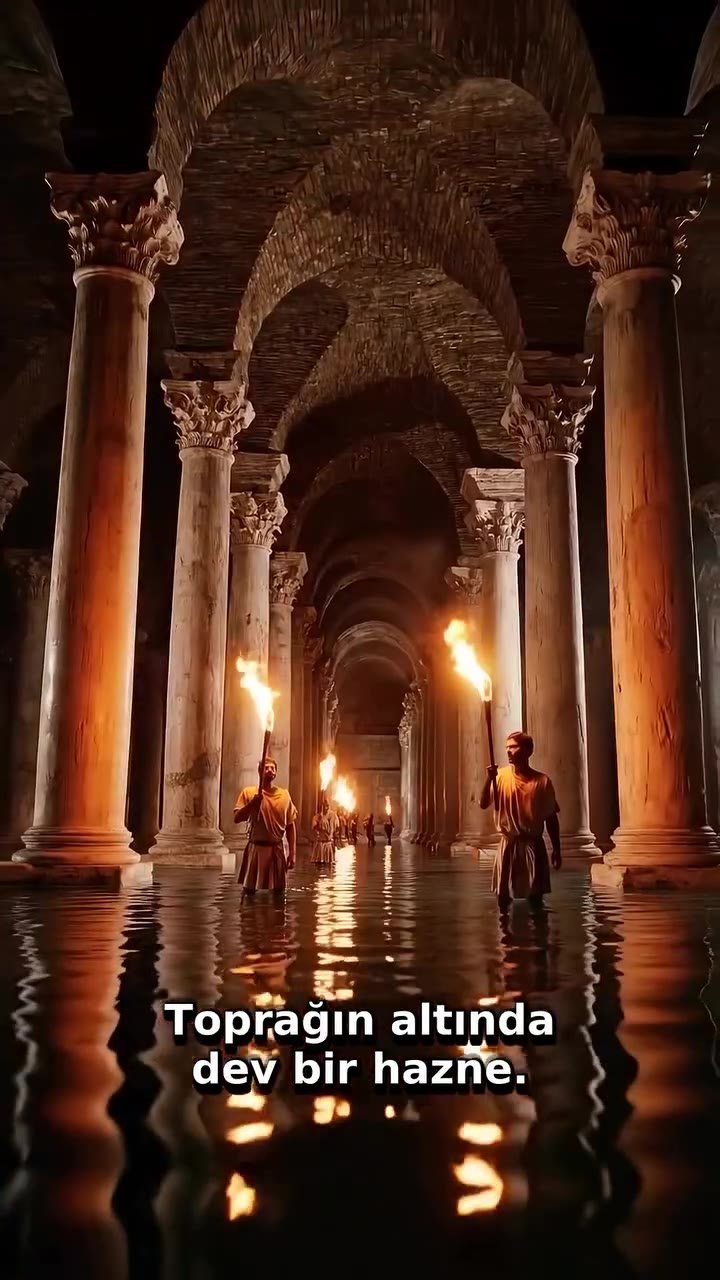
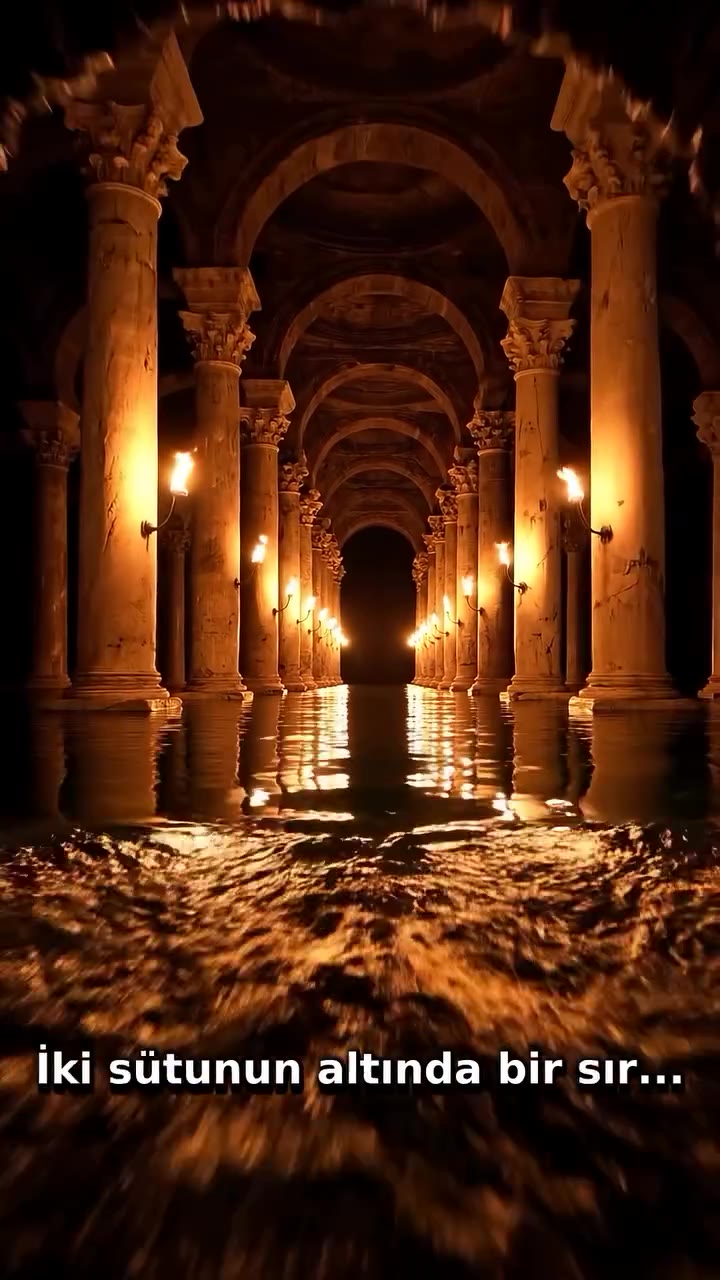
The 2012 photograph, illustrative film reconstructions and the museum as experienced today are different records.
Follow three tasks, not just one structure.
Move from visible form to function, and from function to a question. Open each heading to test your reading.
Carry
Crossing a valley and storing water are different tasks. The visible bridge supports the passage of a channel. Seeing a bridge in a photograph does not reveal the whole urban water network. [4]
Hold
A cistern provides a volume in which water can wait until needed. The Basilica Cistern’s columns support the covering over that volume. A photograph of today’s surface cannot prove that the water level remained the same throughout history. [1][2]
Ask
Before drawing a connection, record its period and evidence. The questions “What does this structure do?” and “Exactly which line connected to it?” may require different kinds of evidence. [3]
A question to take with you
What makes a building compelling: its visible decoration or its unseen task?
Three existing films in Turkish
All three videos retain their Turkish narration and/or on-screen text. No English dub or subtitles have been added. The notes below distinguish their original descriptions; none is an archaeological survey or archival footage of antiquity.
Sources
- Istanbul Metropolitan Municipality · Basilica Cistern Museum
- Culture Portal · Basilica Cistern
- Martin Crapper · The Valens Aqueduct of Constantinople: Hydrology and Hydraulics · Water History, 2020
- Ministry of Culture and Tourism · Fountains in Ottoman Istanbul
- Kültür İstanbul · Restoration and reopening announcement · 22 July 2022
Complete English edition of the current five-chapter Turkish story, including its water-network and seasonal readings. Source checks: 25 October 2026. The municipal museum page timed out on direct retrieval but its indexed official text was available. The hydraulic model concerns the wider network, not measured cistern water levels.
Reading files and delivery language
The existing PDF sample is in Turkish. The Turkish product description lists a 12-page illustrated PDF, three printable exercises with open questions and explained answers, source and image notes, and an offline HTML reader. No purchase link is supplied on that page. This English web edition and its free card do not establish that the full delivery product has been translated.
Open the Turkish PDF sample ↗Continue the water-shaped cities route ↗ · Read the Hippodrome ↗