Object
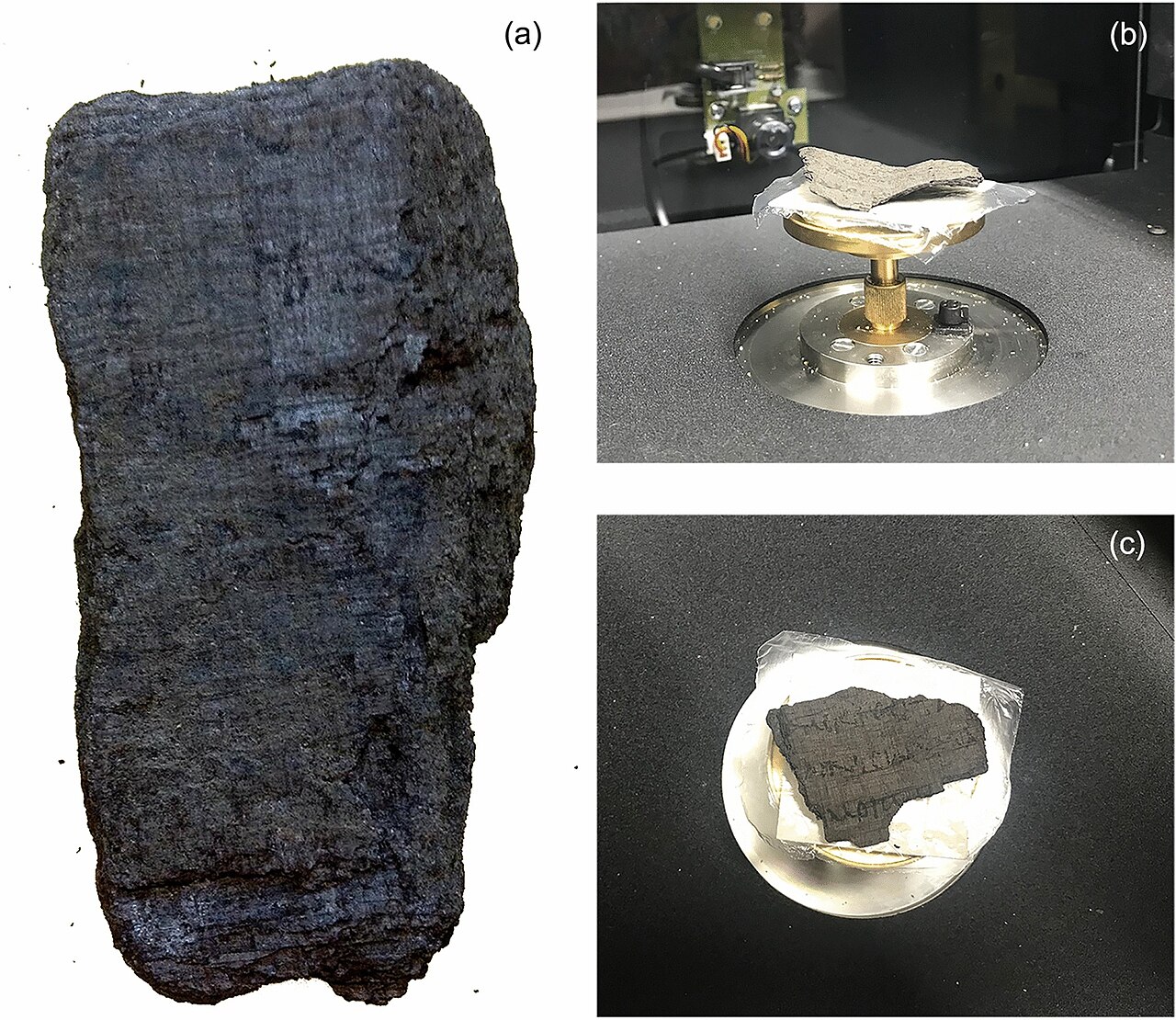
Describe a fold, a break and a surface in the fragment photograph. Which object numbers belong to that image?
 GEÇMİŞİN
HERCULANEUM / THE RETURN OF WRITING
What if opening a book would destroy it? Follow a seaside house, a blackened roll and the patient work that brings writing back into view.
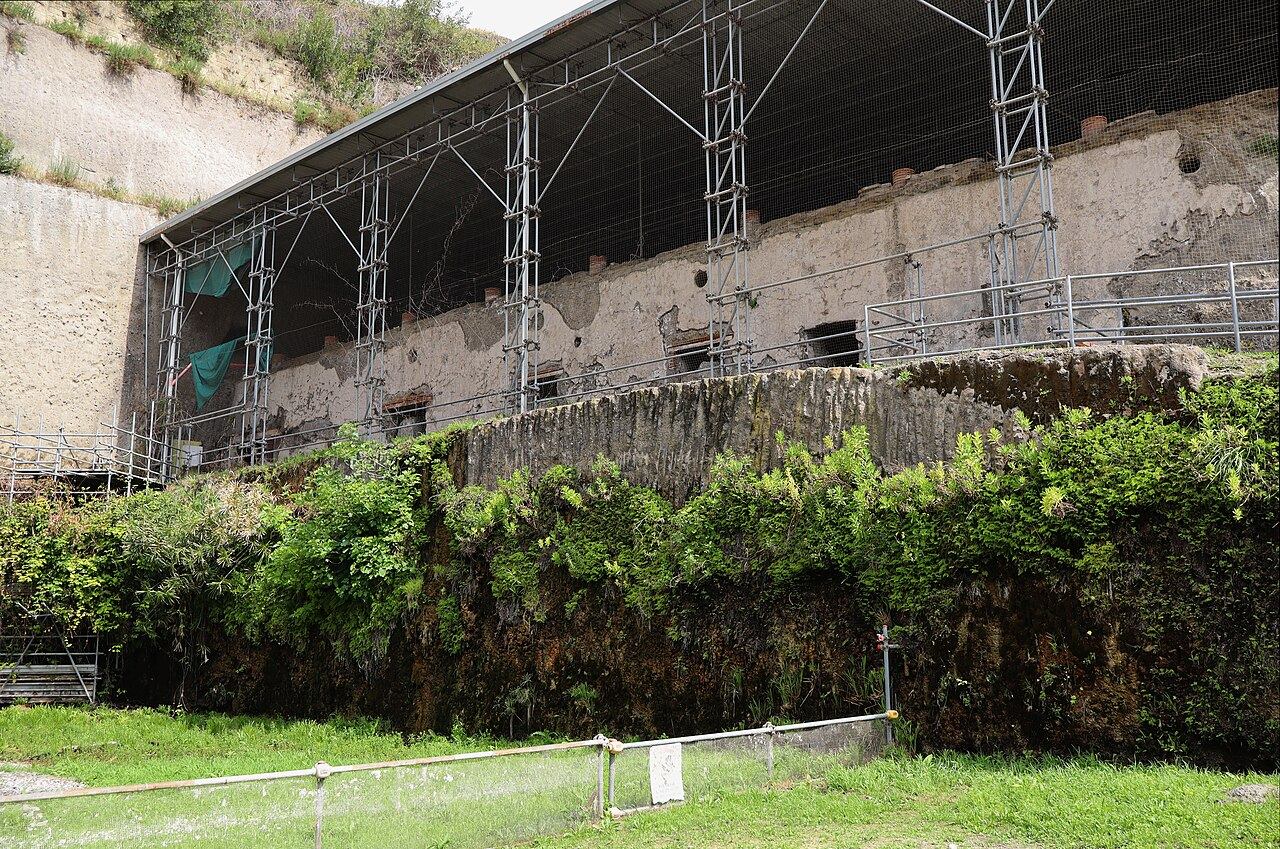
The Villa dei Papiri connects Roman domestic life with an unfinished history of reading. Move from a photograph to a historical plan, then distinguish the papyrus itself, its scanned surface and a scholar’s interpretation. Recovering surviving text does not restore the parts that have disappeared.
READING 01
A Roman villa invites the eye to wander: towards a column, across a courtyard, out to the sea. At the Villa dei Papiri near Herculaneum, another kind of wealth asks for our attention. Books belonged to this world too. The eruption of Vesuvius in AD 79 buried the house; its carbonised papyri became the unexpected remains of a library. Much of the building still lies beneath the modern town. [1]
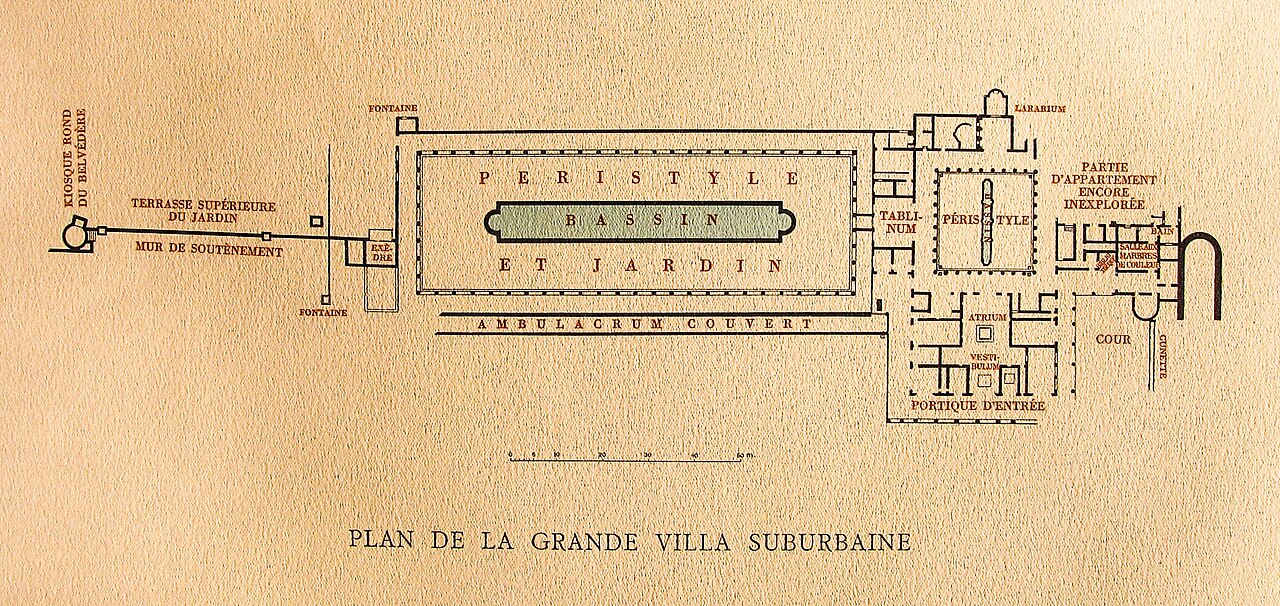
Before looking for a sentence, look for a route. The historical plan stretches sideways across the page. Follow the connections between rooms and open spaces, then return to the photograph. Italy’s Ministry of Culture describes a residence arranged in terraces along the coastline. Its account also records Weber’s plan of 20 July 1754 and the locations of sculptural finds. A drawing can preserve relationships that an isolated object cannot show. [2]
Trace one possible passage with your finger. Where does the drawing let you continue, and where does it leave you wondering? This is a way of reading the image, not a reconstruction of an ancient resident’s walk. Keep that question as we move from the size of a house to the folds of a small, damaged object.
READING 02
The eighteenth-century tunnels brought people back into the buried villa. Finding a roll, however, did not mean its contents could be safely recovered. Getty’s exhibition account describes early opening methods that cut through the material. Writing could be copied from an exposed layer before that layer was scraped away to reach the next. Reading and destruction could become parts of the same operation. [3]
Antonio Piaggio devised a more successful opening system in 1753. Yet the larger dilemma remained: a text and the material carrying it could not simply be separated. The quiet appearance of a museum fragment conceals a history of handling, choices and loss. What survives is both an ancient object and the result of later attempts to understand it. [3]
Now inspect the papyrus photograph. Notice a broken edge, a curved layer and a compressed surface before searching for legible letters. The illustrated fragments are PHerc. 1103 and PHerc. 110. They are not PHerc. 1667, the roll discussed in the 2026 announcement. Their own identities matter. A photograph can help us ask a question without becoming a picture of every discovery that follows.
READING 03
Virtual unwrapping changes the first move. Instead of physically peeling the roll apart, researchers work with X-ray data, follow its internal surfaces and flatten a digital representation. Detecting possible ink is another task again. Imagine the difference between finding a folded sheet, laying out its surface and deciding whether a mark belongs to writing. These stages support one another; they do not answer the same question. [4], [5]
On 5 February 2025, the Bodleian Libraries announced images from inside PHerc. 172. That roll had been scanned at Diamond Light Source in July 2024. The institution carefully defines the machine-learning role in this project as ink detection. Transcription and translation were entrusted to scholars. That distinction belongs to this particular announcement; it is not a claim about every possible use of machine learning. [4]
Think of a magnifying glass bringing a detail closer. It does not, by itself, tell you what the detail means. The excitement comes from the work between the image and the reading: comparing marks, questioning an uncertain shape and keeping a gap visible. Our three discovery panels give each step its own question.
READING 04
On 25 June 2026, Vesuvius Challenge announced an end-to-end reading of the surviving portion of PHerc. 1667. Here, complete does not mean that the original ancient book survives intact. Earlier physical opening attempts had removed outer layers; the remaining core preserves only part of the original height. The announcement presents a philosophical text on ethics, placed in a Stoic context through its language, themes and surviving evidence. [5]
A missing surface remains missing even when neighbouring writing becomes readable. Recovering a continuous sequence is an achievement without turning every damaged line into a certainty. The text was examined and transcribed by papyrologists. The announcement links a research preprint; this page draws on the public explanation, rather than claiming an independent reading of the complete paper. [5]
The project’s data browser groups material by sample identity and connects it with available research artifacts. [6] Use the identifier as an anchor while moving between objects and images. Return finally to the villa photograph. We began with a house and an unseen library. We leave with a different treasure: the possibility of approaching a thought while respecting the fragile material that still carries it.
Choose a question to look more closely.
Describe a fold, a break and a surface in the fragment photograph. Which object numbers belong to that image?
Separate following a papyrus layer from identifying ink. Which task concerns geometry, and which concerns a possible writing signal?
What further judgement is needed to turn a mark into a letter and then into a reading? Leave an uncertain or missing part visibly open.
No. The photograph identifies PHerc. 1103 and PHerc. 110; the announcement concerns PHerc. 1667.
The Bodleian announcement defines its role as detecting ink; human scholars undertake transcription and translation. [4]
The surviving portion of PHerc. 1667, not every part of its original ancient roll. [5]
Progress on one roll does not establish the same state of recovery for every other object. Keep sample identities separate. [5], [6]
A readable surviving surface does not restore vanished outer layers. Gaps remain part of the evidence. [5]
This is our narrative image, not a quotation, an invented ancient voice or proof of a named resident’s feelings.
Investigations proceed through shafts and tunnels, with interruptions. [2], [3]
Piaggio develops a more successful roll-opening system. [3]
Weber’s plan records the villa and sculptural findspots. [2]
The atrium area is partially excavated. [1]
Bodleian announces internal images of PHerc. 172, scanned in July 2024. [4]
The surviving portion of PHerc. 1667 is reported as read end to end; this is not the complete undamaged ancient book. [5]
Official sample data browser ↗ · 25 June 2026 research announcement ↗
No verified Geçmişin Haritası Herculaneum Reel or master film accompanies this story. These are research source links; no film or viewer is copied or embedded here. External playback and 3D interaction have not been verified.
Open the free discovery card ↗
Original free English worksheet, separate from paid products; not a translation or release of a paid Turkish PDF.
Original narrative and English edition: Geçmişin Haritası. Sources and image records checked 27 October 2026. Research announcements retain their own dates. The historical Getty exhibition is a source, not a current event listing. The 2025 villa photograph does not establish present access; check the park’s current notices before visiting.