
Begin with the water
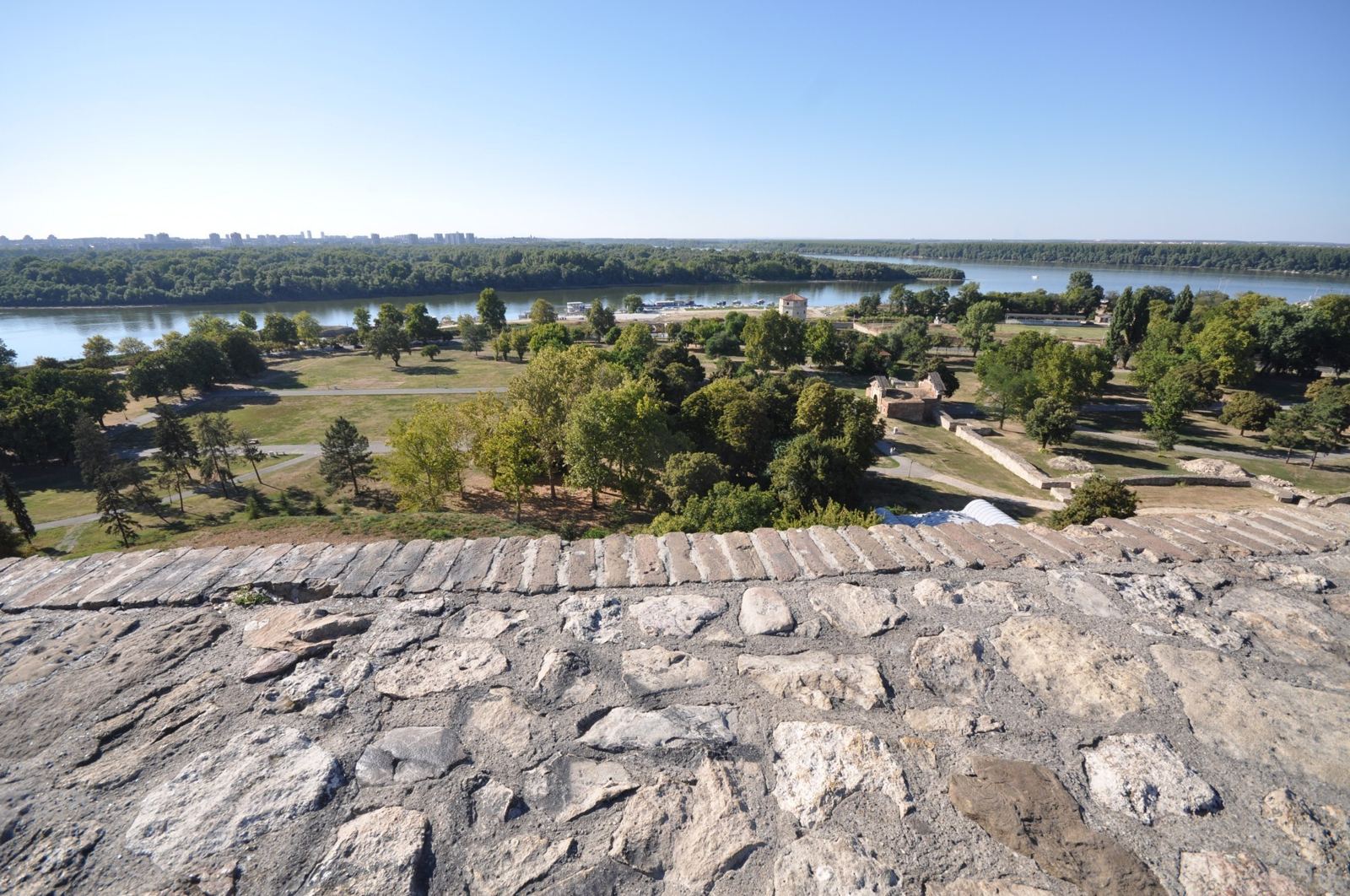
Before looking at the walls, look at the water. Belgrade stands where the Sava meets the Danube. Its position connects routes through a wider landscape. [1] On a map, two lines join almost effortlessly. For people travelling on land or water, that junction raises questions of passage, access and distance. Geography becomes part of the story before a ruler enters it.
Try a reading exercise. For a moment, set famous names aside and leave a height, two rivers and people wishing to cross. Where might movement narrow? Where might a connection become an obstacle? These are questions prompted by the landscape, not the testimony of a particular soldier or resident. They help us notice what a fast account of a victory may leave outside its frame.
Our photograph records a view in 2012. It is not a view of the city in 1521. Keep that difference in mind while following the water with your eye. A present-day landscape can start a historical question without supplying every part of the answer. The pleasure lies in moving between what is visible and what still needs a source.
The work before the siege
Süleyman came to the throne in 1520. Emecen’s account of the following campaign includes roads, bridges and military crossings. [2] Before the final scene at the walls, there was preparation. Turn the film back in thought: a route has to remain usable, a passage has to function, and movement has to be organised.
Another place belongs on the map. Böğürdelen, today’s Šabac, was taken by Ahmed Pasha’s forces on 7 July 1521. [3] Marking it alongside Belgrade changes the scale of the story. Instead of watching a single fortress alone, we begin asking about connections between places and decisions.
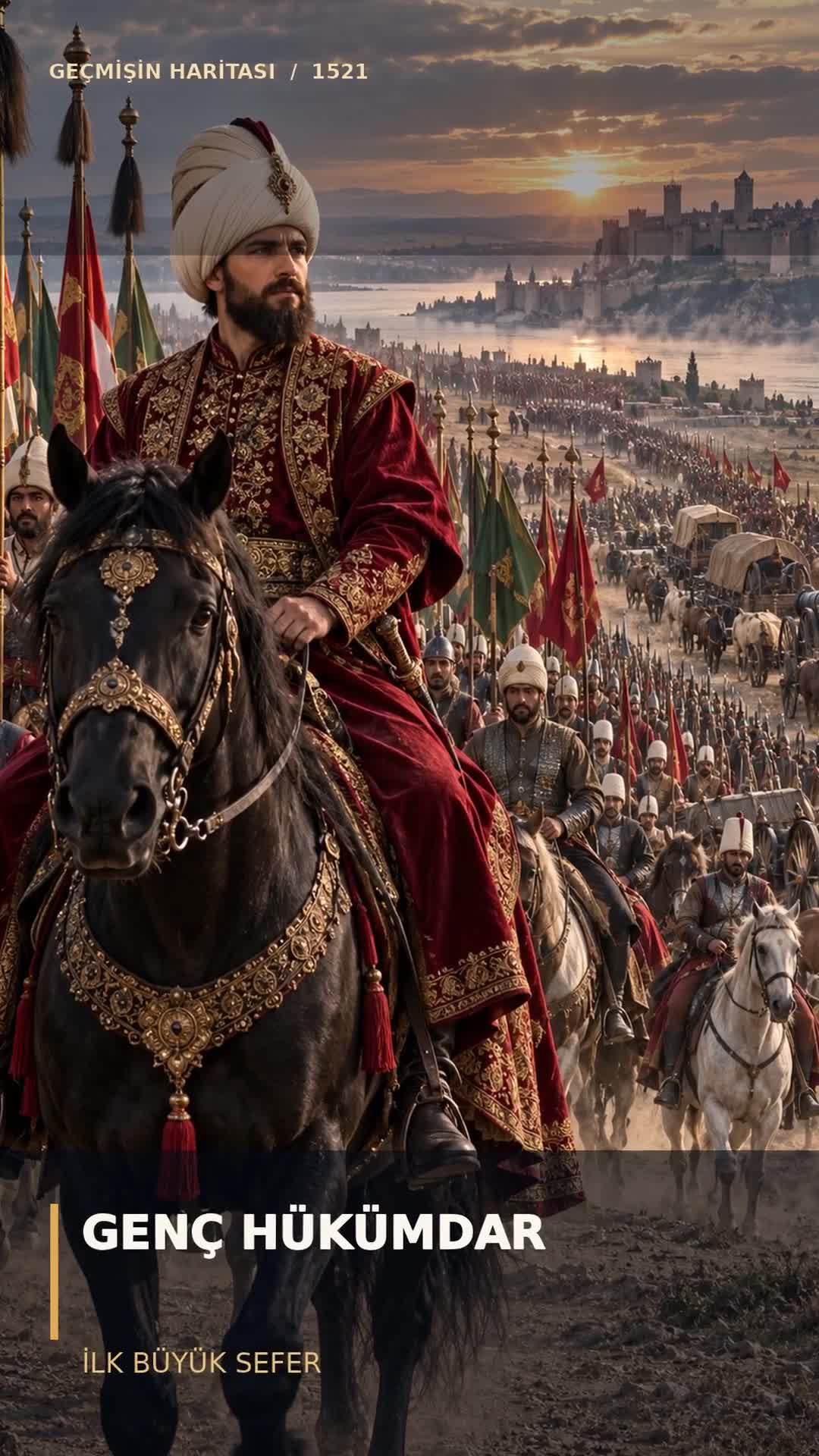
Work need not become decorative background to a famous event. It can be the beginning of an explanation. We do not need to invent a craftsperson’s face or words to consider the importance of preparation. A sequence that passes in seconds on screen may point towards tasks whose duration the film cannot show.
Both sides of the gate
A gate is approached from different directions. To someone outside it may appear a destination; to someone inside, a boundary to defend. That contrast is a reading question, not a claim that everyone experienced the siege in the same way. A city should not become an empty stage simply because a narrative follows an army.
After the Ottoman capture in 1521, part of the population was sent to Istanbul. [1] Pause over that information. A change of colour on a historical map can also mean a change of home and surroundings. Without personal testimony we cannot fill in an individual journey, but we can refuse to let the people disappear behind the outline of a fortress.
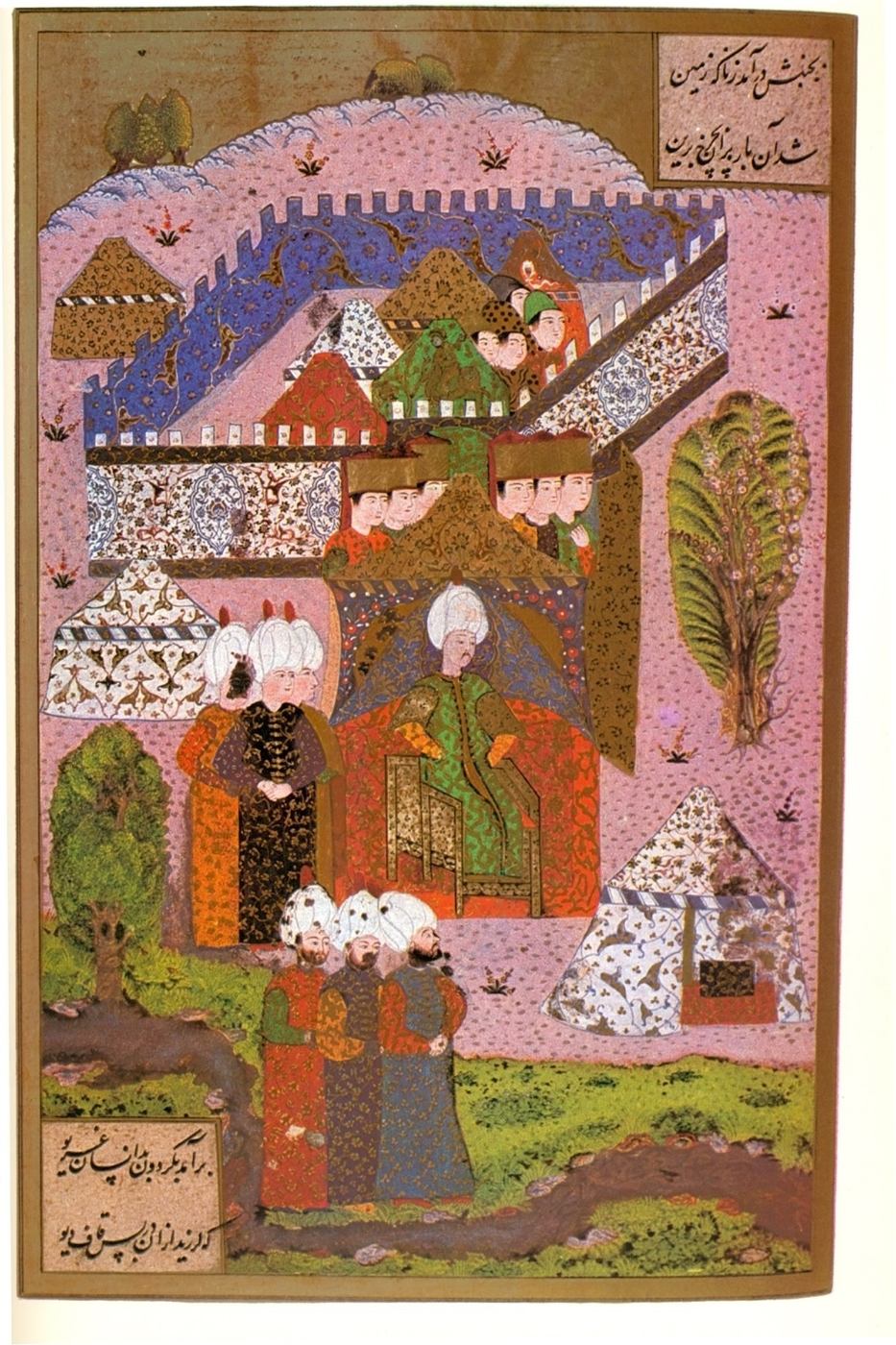
Place the river photograph beside the historical miniature. They do different work. One records a modern view; the other presents the ruler and city through a historical visual language. Neither lets us read the private thoughts of a person at the gate. Their differences make the story richer when we keep them visible.
News of success, news of loss
Emecen distinguishes Süleyman’s entry into Belgrade on 30 August from the capture on the preceding day. He also records news of the deaths of the ruler’s sons Murad and Mahmud during this period. [2] Public success and family loss can stand within the same account without requiring an invented inner monologue.
Look at the miniature again. We do not use it as a document of the arrival of those two messages. A painted face does not directly preserve a private feeling. Let the image invite questions about representation while the written account carries the dated events. Bringing them together does not mean making them interchangeable.
Return to the map one last time. Rivers may seem continuous while a city’s administration, functions and human relationships change. Ask both what made the position important and what the outcome meant for those connected to it. The story of the fortress does not have to end at its walls.
Timeline
- 1520: Süleyman succeeds to the Ottoman throne. [2]
- 7 July 1521: capture of Böğürdelen / Šabac. [3]
- August 1521: Belgrade comes under Ottoman rule. [1]
- 30 August 1521: Süleyman enters the city, the day after its capture in Emecen’s account. [2]
- After the campaign: part of Belgrade’s population is sent to Istanbul. [1]
Evidence and reconstruction
Is 30 August the same event as the capture?
The cited account identifies it as the ruler’s entry on the following day. [2]
Did one assault explain the entire outcome?
We do not make that claim. Preparations and crossings also belong to the account. [2]
Are the film’s buildings and faces evidence?
They are reconstructions, not archival images or measured military reconstructions.
Does the miniature reveal private grief?
No. Image interpretation and documentary evidence must remain distinguishable.
Film in Turkish
Our existing film has Turkish narration; no English dubbing or subtitles are supplied. The scenes are reconstructions. Full narration and subtitle alignment have not been newly verified.