
One harbour, two horizons
Begin with a ship approaching the coast. The shore is more than a destination: it is a threshold where cargo is unloaded, languages change and a letter passes into another hand. This is an imaginative way into a port city, not a recorded passenger’s memory. Enter Alexandria only through its lost library and you may overlook the routes that brought people and questions there.
CEAlex studies the Mediterranean waterfront together with Lake Mareotis and its links to the Nile. Its harbour account combines historical maps, archaeology and geomorphology. The connection between coast and hinterland belongs to the city’s history; a modern shoreline is not a transparent view of its ancient counterpart. [1]
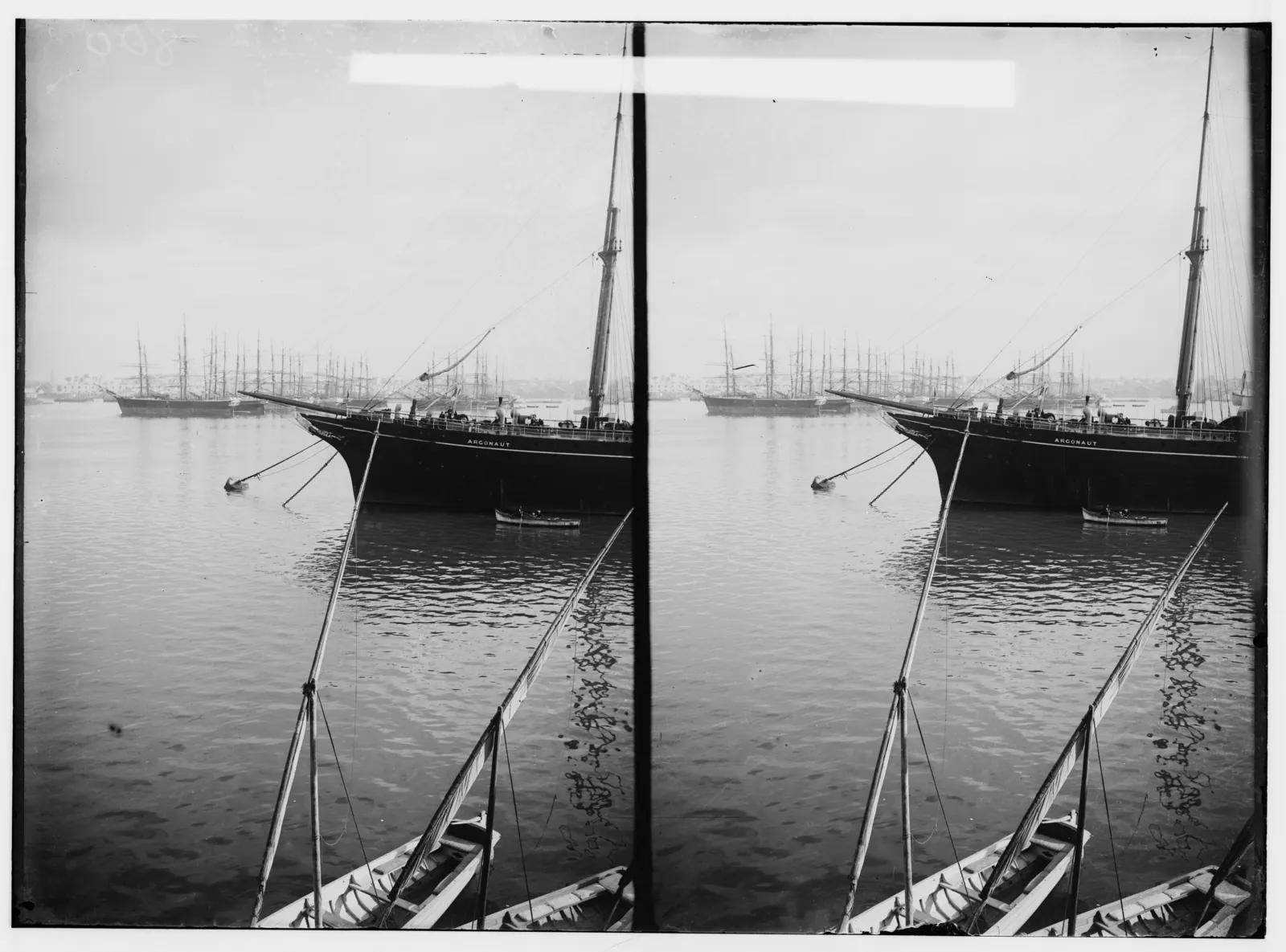
Read the black-and-white harbour photograph with its date in mind. The archive record dates it to 1900. It is not a view of Cleopatra’s Alexandria. It provides a comparison across time, rather than direct evidence for an ancient arrangement of ships or buildings.
A historical story sometimes begins by learning to see two things together. Here they are the harbour and knowledge. As we consider the movement of goods and people, we can also ask about the movement of texts and questions. We are not identifying the cargo of one particular ship. We are opening a city beyond the label of one celebrated building.
A fortress where the light once stood
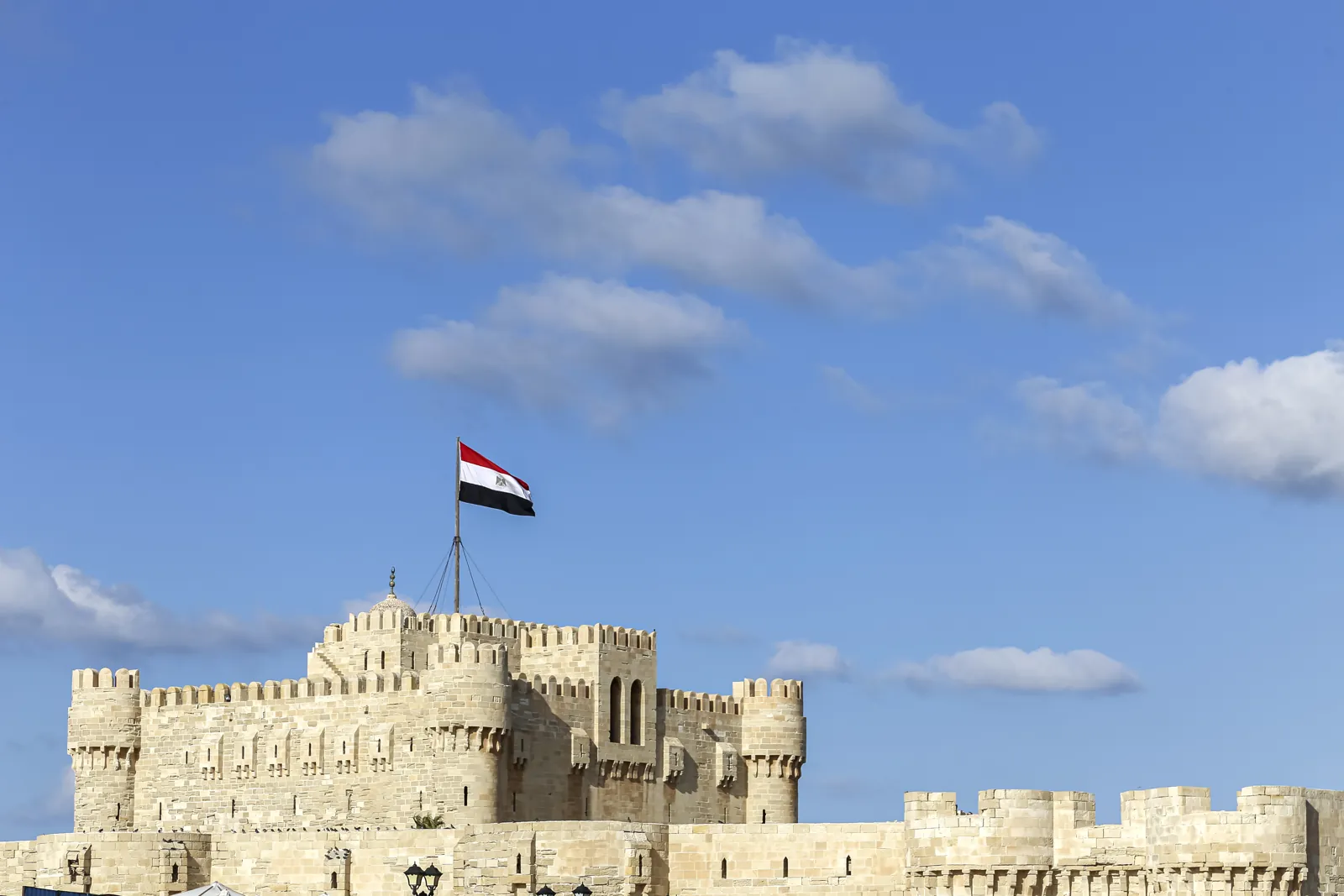
The strong stone structure in the colour photograph is Qaitbay Fort, not the Pharos lighthouse. Egypt’s Ministry of Tourism and Antiquities dates its construction over the lighthouse ruins to 1477–1479. Looking towards the coast from the same place does not mean standing in the same historical moment. A location associated with guidance became a place of defence. [6]
The lighthouse story continues below the surface. Since 1994, CEAlex has surveyed architectural and sculptural fragments around the site. Its researchers distinguish remains of different structures and use photogrammetry to make measurable records. The seabed is an archaeological context, not a collection of interchangeable props for a lost city. [2]
Consider a doorway fragment. Alone, it may impress us through size. With its material, broken edges and recorded position, it becomes a question about relationships. What might fit beside it? Which feature belongs to another period? These are prompts inspired by archaeological practice; this page does not diagnose a stone from a photograph.
Return to the fortress without rushing to fill the view with a certain ancient skyline. A compelling scene is already present: a surviving building, submerged remains and people trying to understand them. Between complete disappearance and complete reconstruction lies a wide field of investigation. That is where curiosity can stay alive.
What keeps books alive
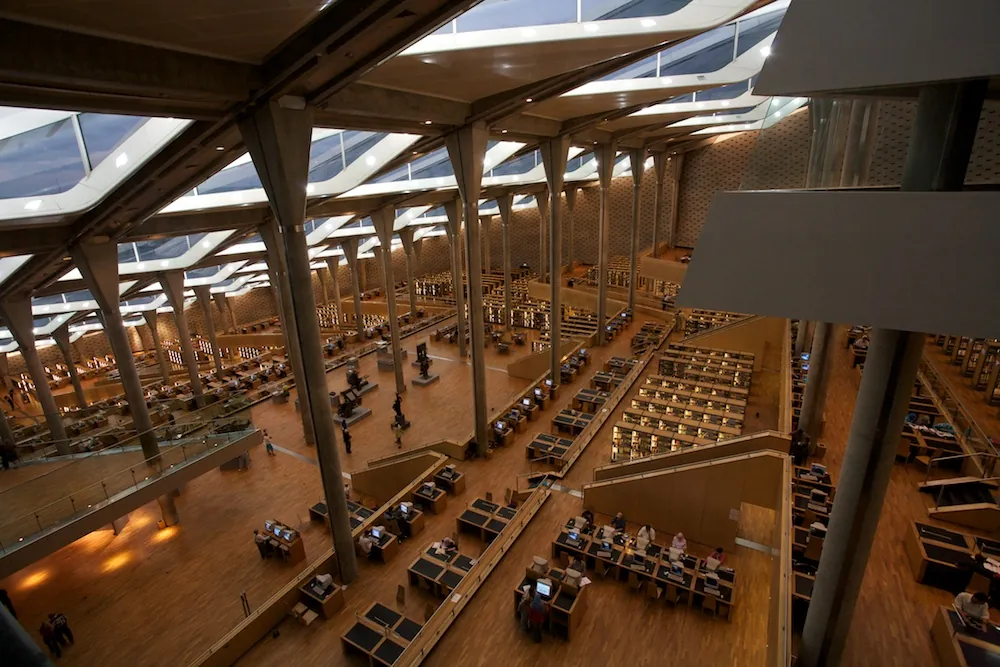
The bright reading room belongs to today’s Bibliotheca Alexandrina. It is not a preserved chamber of the ancient library. The institution describes its mission as renewing a spirit of scholarship and openness; libraries, museums and research activities form part of its modern complex. Shared aspirations do not turn two institutions into one uninterrupted building. [4]
What happened to the ancient collection cannot be reduced confidently to a single culprit on a single night. Open University’s source discussion compares accounts written at different times and asks what each author meant by books, library and location. A dramatic fire scene can conceal these questions instead of answering them. [3]
A room matters to a collection, but so do the people who read, copy, explain and transmit texts. This is our question about preservation, not a claim to know every work once held in Alexandria. A building can dominate an image while the slower labour of keeping knowledge available remains outside the frame.
Return to the ship at the beginning. You now carry a question rather than a treasure chest: is a city’s greatness measured only by the structures it raises, or also by the routes through which people encounter one another’s ideas? Reading Alexandria means looking for more than lost books and a missing lighthouse. The coast becomes a way to think about how knowledge travels.
Timeline
Evidence and interpretation
Does the 1900 harbour photograph show the ancient city?
No. The archive date and the period discussed in the text must be read separately.
Is every underwater block part of the lighthouse?
No. CEAlex distinguishes remains of different structures. Material, position and relationships matter. [2]
Is the modern reading room an ancient reconstruction?
No. It belongs to the new Bibliotheca Alexandrina, a modern institution with its own mission. [4]
No verified film from our account is available. CEAlex links its own research video from the source page; external playback has not been verified here. Open the CEAlex research and video page