
A coin, a workshop and a changing city
Reading wealth at two scales
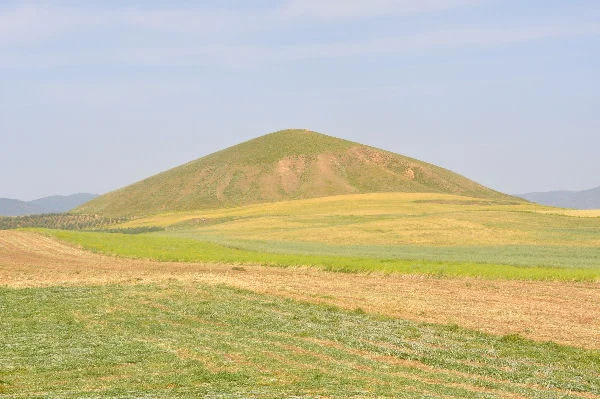
Look across the low ground toward a mound. Its outline can seem simple, yet its scale changes the way the surrounding land is read. Now imagine placing a small coin beside that landscape in a notebook. One fits inside the hand; the other makes the eye travel. This comparison is our starting exercise, not a claim that a particular person once made the same journey.
Sardis was the Lydian capital in the eighth to sixth centuries BCE. UNESCO describes a city organised through walls, terraces and different areas of activity, with the associated burial landscape at Bin Tepe. Wealth here was not only something carried away in a bag. It could become a way of shaping urban space and marking a horizon. That is an interpretive question prompted by the evidence, rather than a complete explanation of every building. [1]
The photograph of Bin Tepe is a modern record of a visible mound. The Commons description identifies it with the tomb of Alyattes. Keep that attribution beside its source rather than treating a photograph as a view inside a sealed chamber. A mound’s outline cannot tell us, by itself, who performed every task involved in its construction. [6]
Ask how the two scales communicate. What can a small object say about authority, and what might a monumental landscape make visible? Their meanings need not be identical. Keeping the questions side by side lets us enjoy the striking contrast without reducing a city to the familiar phrase rich as Croesus.
A stamp, a metal and a promise
A coin invites close looking. Its surface, weight and mark belong to a practical object as well as to an image. Before asking how much it could buy, ask what made it acceptable to another person. This turns a distant story of royal treasure into a question about confidence, recognition and the systems within which an object could circulate.
John H. Kroll’s expedition essay explains the problem posed by electrum, an alloy of gold and silver. Stamped units gave an issuing authority a role in guaranteeing value. He connects the later gold-and-silver reform with Croesus, while discussing earlier electrum issues and neighbouring producers. Coinage did not simply spring into existence as a fully formed modern monetary system. [2]
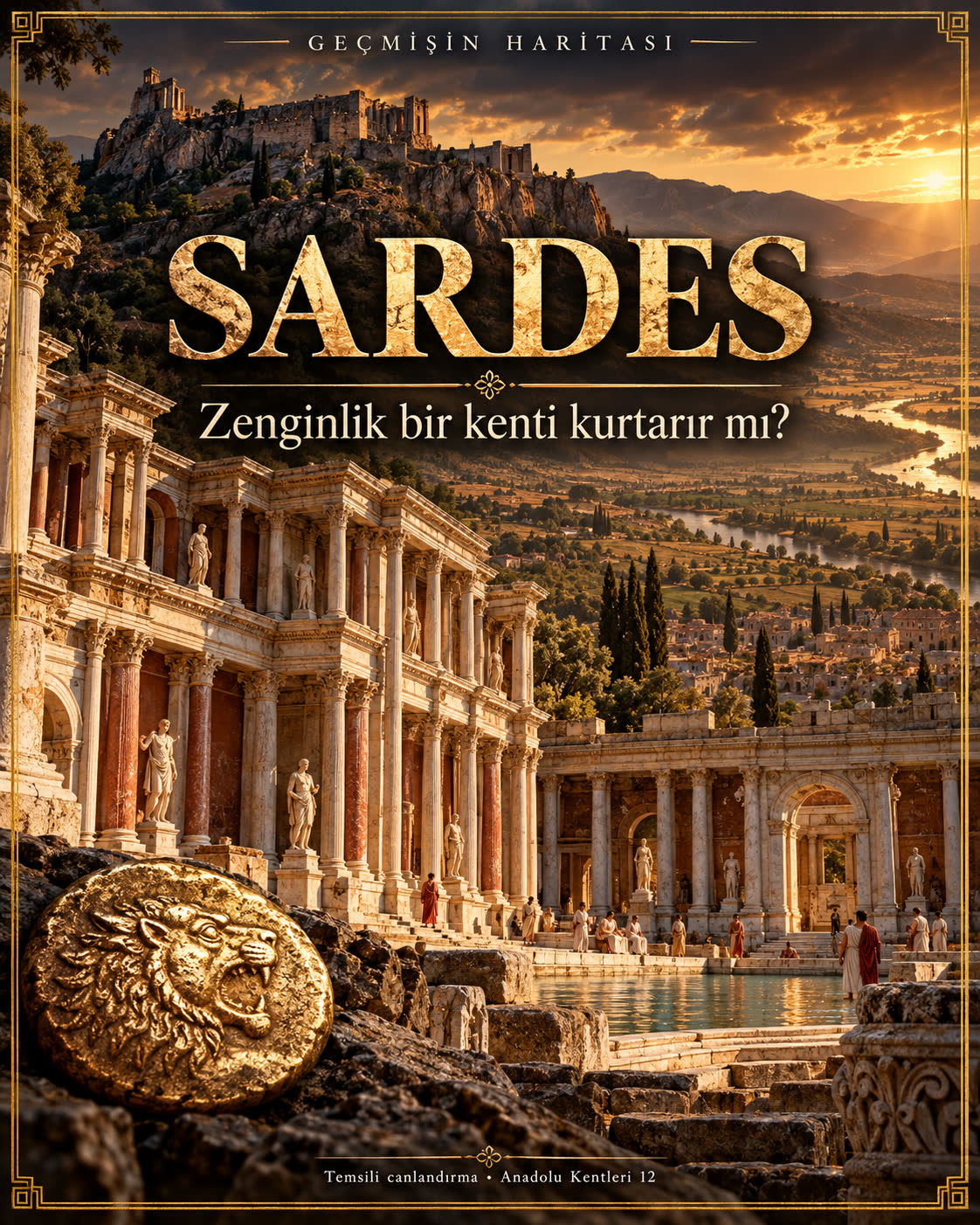
The existing artistic cover is deliberately shown here as a contrast. Its imagined scene cannot identify a mint, establish the appearance of a particular coin or demonstrate the clothes of a Lydian worker. A picture can open a question without supplying its answer. To examine an actual object, follow a documented catalogue entry and distinguish the object’s material from the meaning attributed to its stamp.
Try drawing three empty boxes labelled metal, mark and acceptance. Fill each only with information a source can support. Leave an unanswered detail open. The exercise makes a small object less ordinary: it becomes a meeting point between physical substance and social agreement, rather than simply a piece of shining treasure.
Behind the shine: a place of work
Wealth has a material history. Instead of beginning with a throne, begin with the question of what happens to metal before it becomes an object. Heat, containers, substances and skilled handling draw attention to work that a finished coin does not necessarily reveal. This is a route into the evidence, not an invented conversation inside an ancient workshop.
The expedition’s Pactolus North account locates refining installations outside the city defences, near the stream, and dates their use to the first half of the sixth century BCE. Its explanation describes the separation of gold and silver from electrum. This is archaeological context for a process; it should not be relabelled as an excavated mint merely because coinage is part of the wider story. [4]
The specialist refining essay distinguishes cementation from cupellation and also leaves an important question open. Its discussion challenges the easy assumption that all electrum used for Lydian coinage came directly from the Pactolus. It considers other possible sources of the metal. Read that proposal as a hypothesis, not a newly proven route from one mine to every coin. [3]
Return to the mound photograph. It is not an image of the refinery, and no paired before-and-after scene is being proposed. Moving between a landscape and a process is an editorial comparison. Its purpose is to keep different kinds of labour visible and to ask which remains, analyses or records would let us connect them more precisely.
A city that outlived a kingdom
The central question now becomes sharper. If a place was famous for wealth, did wealth make it secure? A reputation is not an explanation of every political outcome. Kroll places the Persian capture of Sardis in the mid-540s BCE and describes the continuation of coin production under Persian authority. A change of ruler did not make every object or practice disappear. [2]
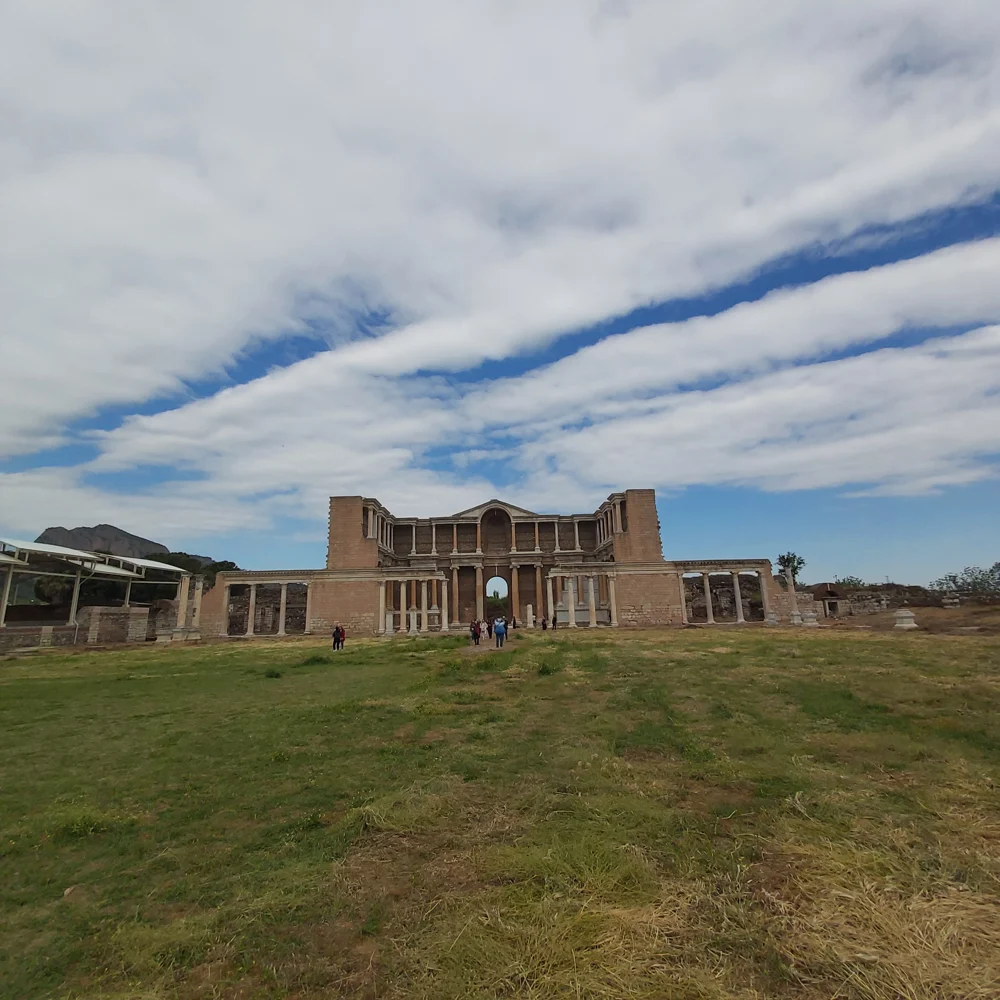
The photograph of the bath-gymnasium opens a much later layer. Cornell’s project account places this complex in the early third century CE and notes its restoration. It is not a photograph of Croesus’s palace. The impressive visible city and the Lydian capital belong to overlapping histories, but they are not interchangeable labels for every surviving structure. [5][7]
UNESCO’s 2025 inscription joins Sardis and the Lydian tumuli as a serial property. The same account acknowledges reconstruction and looting among the complications of reading the remains. Recognition is a modern heritage event; it does not freeze a place in antiquity or guarantee that every visitor sees an untouched surface. Current access and conservation conditions require separate checking. [1]
Close the notebook with the coin question still beside the mound. Wealth could be made portable, worked through technical processes or expressed in monuments. It could not remove a city from history. Sardis becomes more compelling when we allow the capital, the workshop, the cemetery and the later buildings to keep their different dates, while asking how people moved among those worlds.
Keep the different dates visible
- Eighth–sixth centuries BCE
- Sardis as the Lydian capital. [1]
- Seventh century BCE
- Early electrum coinage in the regional development discussed by Kroll; no single exact invention day asserted. [2]
- First half of the sixth century BCE
- Use of the Pactolus North refining installations. [4]
- Around the middle of the sixth century BCE
- Gold-and-silver coinage reform associated with Croesus. [2]
- Mid-540s BCE
- Persian capture in Kroll’s account; coin production continues under Persian authority. [2]
- Early third century CE
- Bath-gymnasium layer described by Cornell; much later than the Lydian kingdom. [5]
- 1958
- Beginning of the Harvard-Cornell exploration described by Cornell. [5]
- 2025
- Sardis and the Lydian Tumuli of Bin Tepe inscribed on the World Heritage List. [1]
Fact, interpretation and illustration
Archaeological setting
Refining installations are evidence of metal processing; they are not automatically an excavated mint. [4]
Research hypothesis
The specialist essay questions a simple Pactolus-only electrum origin. An alternative proposed source is not proof of every metal journey. [3]
Different periods
The photographed bath-gymnasium belongs to a later Roman layer, not the Lydian palace. [5][7]
Attribution and image
The mound record identifies Alyattes; the modern photograph does not expose the burial chamber or independently settle every attribution. [6]
Wealth and legend
Fame for wealth does not prove invulnerability. Literary reputation, archaeological remains and modern interpretation do different jobs.
Illustration
The existing artistic cover is representative; it is not a survey, documentary photograph or verified costume reconstruction.
Three doors into your own enquiry
Change the scale
Compare a small object with a monumental landscape. Which different records would you need for material, date and meaning?
Keep process and product separate
Why can an installation for refining metal not automatically be called a mint? Write the extra evidence that would be needed.
Read a layered city
Place the Lydian capital, Roman bath-gymnasium, photo dates and 2025 inscription on separate lines. What does each date describe?
Film and image status
No verified Geçmişin Haritası Sardis Reel or master video is available for this edition. No video has been copied, embedded or represented as transferred. The two documentary photographs and existing artistic cover are identified separately. Explore the excavation-sector account for research context; that link is not a claim of video playback.
Reading files and delivery language
This is an expanded English web story with an original free discovery worksheet. It is not a translated paid PDF or a promise of a finished book. No new price, sale or membership is offered.
Follow the evidence
Checked 30 October 2026. Institutional summaries, specialist interpretations and image-rights records have different roles. Full books cited by the expedition were not read. Current access and conservation conditions are not independently verified.
- UNESCO · Sardis and the Lydian Tumuli of Bin Tepe · 1731
Official listing, synthesis, authenticity and inscription year read directly. No claim of current opening, route or safety verification.
- John H. Kroll · The Coins of Sardis · 2010
Expedition-hosted specialist essay, relevant early coinage/reform/Persian sections read directly. Ancient quotations and modern interpretation distinguished; no exact invention year asserted.
- Crawford H. Greenewalt Jr., with Nicholas Cahill · Gold and Silver Refining at Sardis · 2010
Process and final-questions sections read directly. Alternative electrum provenance is explicitly a hypothesis; full cited books were not read.
- Sardis Expedition · Pactolus North
Excavation-sector description read directly. Refining process is not equated with a mint. Its plans/images are copyrighted and were not copied.
- Cornell Archaeology · Sardis project
Institutional project overview read directly. Used for later bath-gymnasium and 1958 project start; no current personnel or access claim.
- Jona Lendering · Bin Tepe, large tumulus · Commons rights record
Author, licensing and record date read directly: Jona Lendering, Livius.org, CC0. Record date 22 November 2018 coincides with upload; capture date not independently established.
- Basak · Gymnasium at Sardis · Commons rights record
Author, EXIF date and licence read directly: Basak, 29 April 2023, CC BY-SA 4.0. Dated photograph, not today’s condition or a Lydian-period view.


Photo licences apply to the identified images and derivatives, not to the entire original story. Resized WebP derivatives retain attribution; original image files and rights records accompany the publication package. No copyrighted excavation plan or research photograph was copied from the expedition website.