
Two existing films, two questions
Both films have Turkish narration and screen text. No English dubbing or embedded English subtitles are provided. Scenes are AI-assisted representative illustrations, not historical footage. Full playback, listening and subtitle alignment have not been verified for this edition.
A quarantine hospital?
Unchanged for 2,400 years?
Read alongside the films
The quarantine Reel uses 1830–1831 and 1836–1837; the academic abstract specifically states 1831 and 1837. The second film’s 2,400-year question concerns continuity of place, not unchanged fabric. Compare an island’s history, construction phases and image dates separately. [1][3]
Which detail is visible? Which needs a written record? Which belongs to a representative scene?
Four ways to look beyond the silhouette
An island is not the same age as every wall
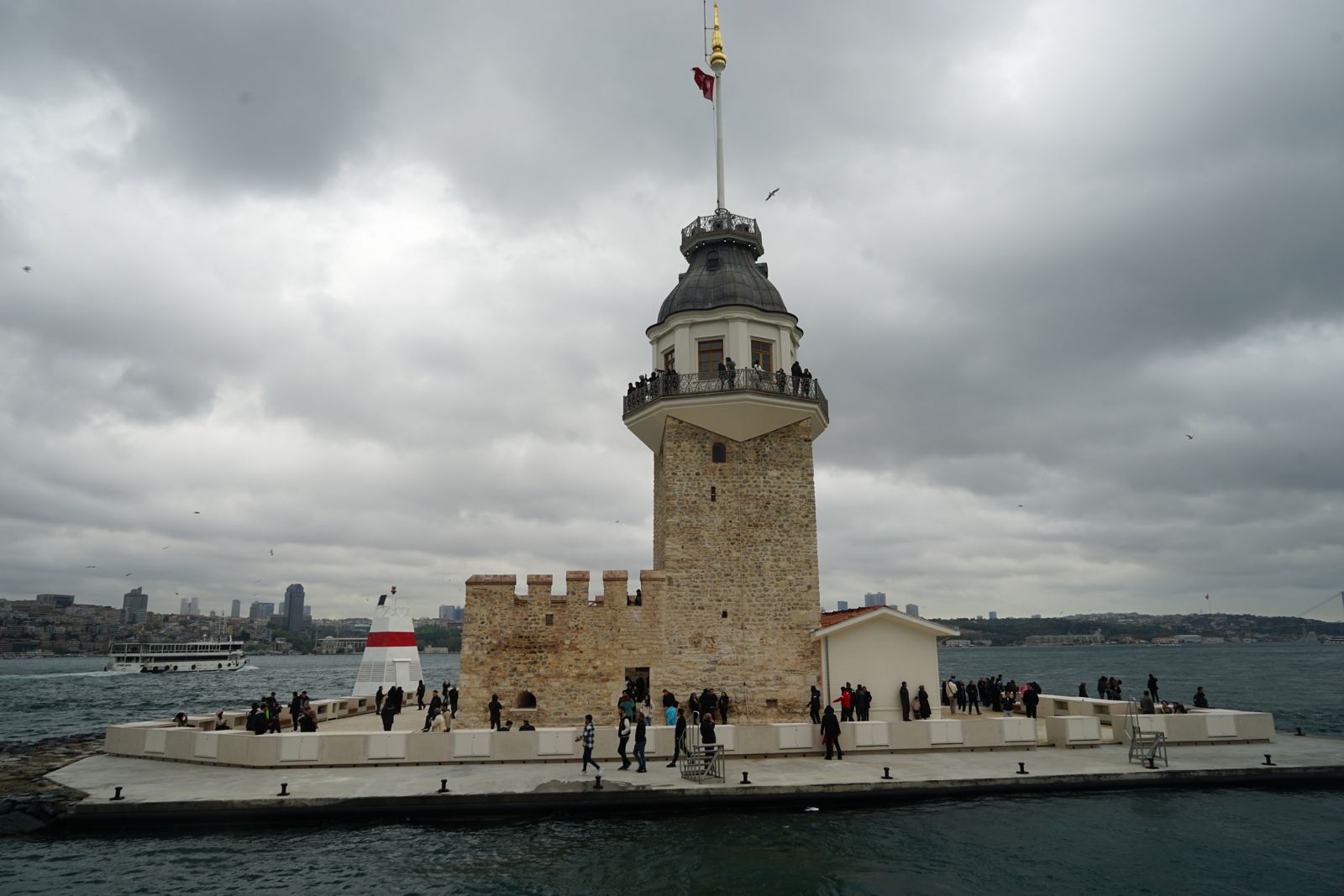
From the shore at Salacak, the tower can look like a single mark: a vertical stroke surrounded by water, with the city beyond. That familiar outline conceals a question. Are we dating the island, the building on it, or the meanings Istanbul has given it? Their timelines need not coincide. A long history of a place does not make every visible stone equally old.
The official history places an early customs installation under the heading 410 BCE and describes later defensive and Ottoman phases. Read that date as part of the official account of the site, not a certificate that today’s tower has survived unchanged from antiquity. The restoration record describes alterations and replacement work: this is a building worked on through time, not one uninterrupted block of ancient masonry. [1][5]
Begin with a photograph and write only what you see: water, a low enclosure, the tower, a balcony, a roof. On another line, write what you infer. A commanding position may suggest watching or signalling; the image alone cannot name an official who stood there in a particular century. Separating those lines gives a small travel note a stronger foundation.
Our opening scene is an exercise in looking, not an invented historical conversation. Keep the surrounding water in view. It connects the island to journeys while also separating it from ordinary streets. That tension helps us think about changing uses. It is a spatial reading, whose next step is to ask what records support a particular historical function.
Before it was a view, it was a signal
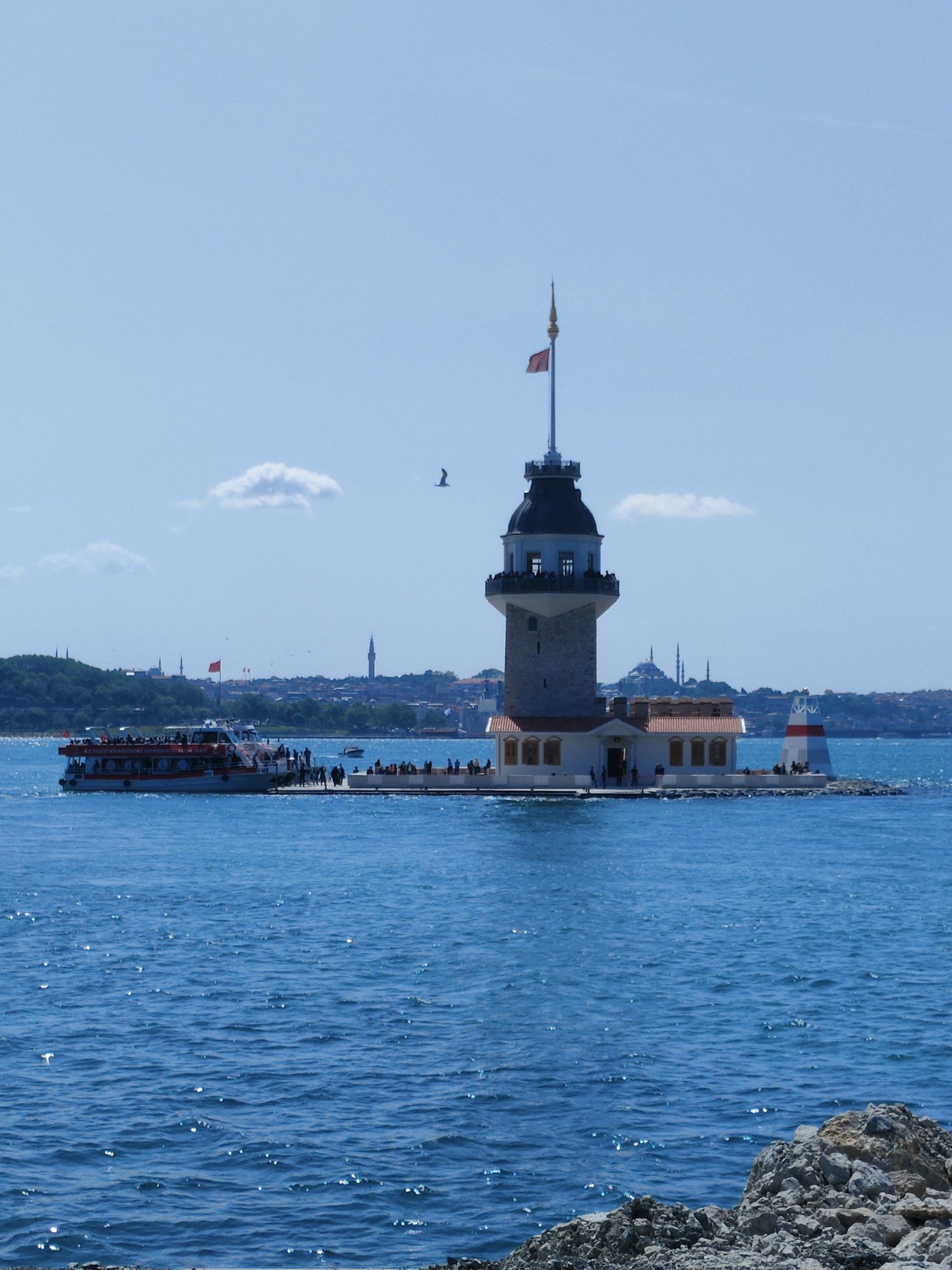
It is easy to imagine the tower as an illuminated ornament of the city. Remember its lighthouse role and the view changes. The official history associates a guiding lantern with Nevşehirli Damat İbrahim Pasha during Ahmed III’s reign. Light here belongs to the practical problem of finding a way, as well as to the pleasure of looking across the water. [1]
A sign at sea carries information for someone able to read it. A spectator on shore and a person travelling by water can see the same structure while asking different questions. Where are we? What makes this point visible? What does its position help us understand? These questions need no invented account of a particular sailor’s night.
Add repair to that way of looking. The official repair chronology identifies substantial work in 1832–1833 under Mahmud II. Reading that a part was renewed does not diminish the monument. It makes the work of keeping it legible more visible. Preservation includes decisions about materials and form, and those decisions themselves become part of a place’s history. [2]
Keep two dates together: the date of the event being discussed and the date of the image used to illustrate it. Both photographs here were taken in May 2023. They let us inspect a modern appearance while sources describe earlier functions. Neither photograph is presented as an eighteenth-century night scene or proof of how a particular lamp operated. [8][9]
Quarantine: near the shore, apart from its flow
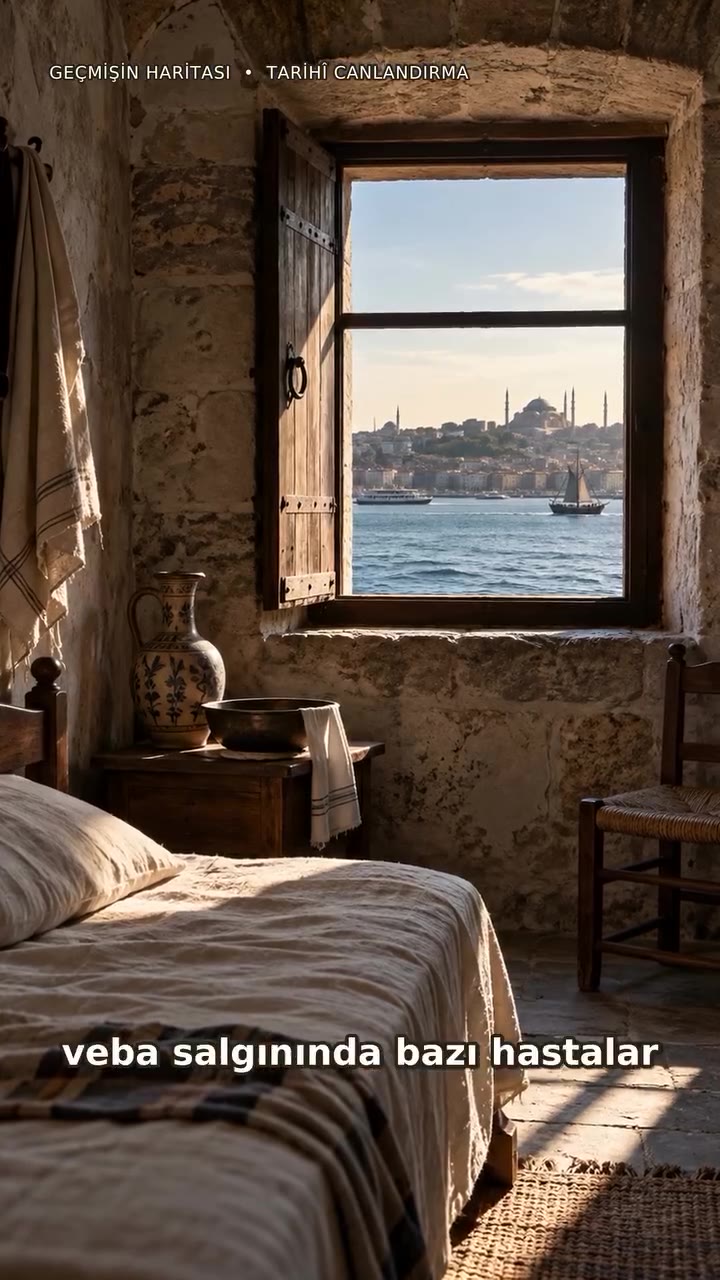
The tower’s epidemic history opens a less familiar door in its celebrated silhouette. The abstract of Kifayet Özkul and Süreyya Oskay’s 2020 study describes its use as a quarantine hospital during the 1831 cholera epidemic on Mahmud II’s orders, and again for patients during plague in 1837. A landmark becomes a place connected with health administration, rather than only a watcher over the sea. [3]
That information invites a dramatic scene. It does not supply a room plan, a named patient or a conversation at a bedside. The illustrative film uses rooms and figures to make an unfamiliar function imaginable. We can remember those scenes without treating them as records of a particular person’s experience. The surviving evidence and the picture made for a viewer do different jobs.
Consider the island’s relationship with the shore. Water makes distance visible; a place can be close to the city yet apart from its daily circulation. This observation helps us frame a question about quarantine, but does not explain every medical procedure or administrative decision. Location and institutional operation are different enquiries, and the latter needs further research.
The article’s abstract also makes a strong claim about preventing spread. We do not turn that into a measured, single-cause explanation for an entire epidemic. This reading concerns the reported use of the tower. It does not claim that one building alone stopped cholera or plague. Historical curiosity grows when a striking scene leads to a precise question rather than an enlarged promise.
A legend can live without becoming a building record
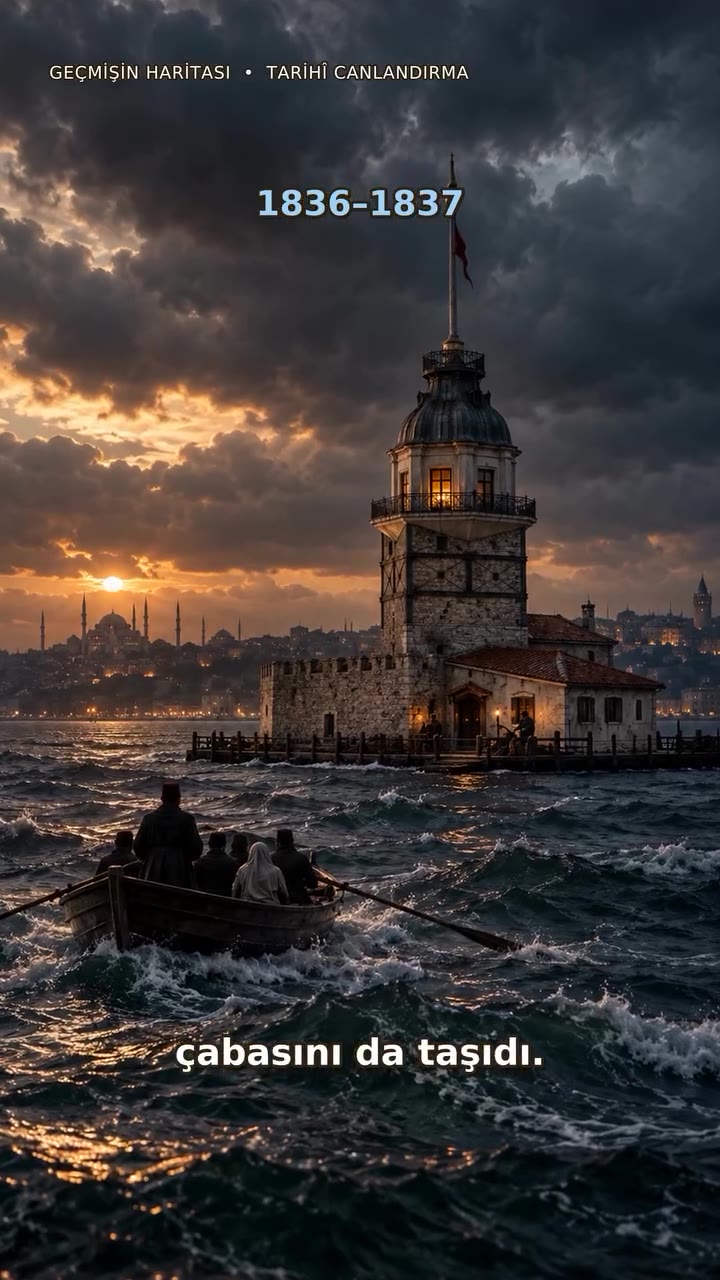
Sometimes a story makes a place unforgettable before we know its history. The official tower website gives legends their own category, separate from its historical chronology. That is a useful invitation to listen differently. A legend can express fear, separation or the wish to protect someone without proving that its characters lived in the rooms we see. [6]
Hero and Leander require a geographical pause. Üsküdar Municipality’s account places the lovers at Sestos and Abydos on opposite sides of the Hellespont, the Dardanelles, before discussing attachment of the tale to Istanbul. Do not use that story as a foundation document for this Bosphorus tower. A travelling name or motif is a subject for cultural history, not evidence that every associated event occurred here. [7]
Try keeping two notes while hearing a legend. One catches what the story makes you feel: waiting, danger, longing. The other asks what kind of source could test a claim. The first note is not wrong; it simply does not do the work of the second. Keeping them distinct lets imagination remain vivid while allowing a historical question to stay open.
Back on the shore, the outline has not changed during our reading. What has changed is the way we look. We can now see uses, repairs, epidemic history and stories approaching the same place along different paths. Reading the Maiden’s Tower means keeping those paths visible, rather than forcing them into one founding date or one irresistible tale.
Island, building and function: keep the dates apart
- 410 BCE · official chronology
- The official website’s early customs-site date, not the age of every part of today’s building. [1]
- Twelfth century
- The official account associates Manuel I Komnenos with a defensive tower. [1]
- After 1453
- Ottoman rebuilding and changing uses in the official account. [1]
- 1831
- Quarantine-hospital use during cholera, reported in the Özkul–Oskay abstract. [3]
- 1832–1833
- Substantial repairs under Mahmud II in the official repair chronology. [2]
- 1837
- Quarantine use during plague, reported in the same abstract. [3]
- 2021–2023
- Ministry restoration programme; its scope account states completion and reopening on 11 May 2023. This is not a current access notice. [4][5]
Evidence, interpretation, legend and illustration
Historical use
The academic abstract reports quarantine use in 1831 and 1837; it does not identify every patient or room. [3]
Spatial interpretation
Reading water as separation is our observation about location, not proof of the full reasoning behind administrative decisions.
Legend
Hero and Leander belong to a tale set across the Dardanelles; association with Istanbul does not document this tower’s construction. [6][7]
Representative scene
Film rooms, figures and imagined shorelines are AI-assisted illustrations, not archive photographs or measured reconstructions.
Three doors into your own enquiry
Look twice
Choose a photograph. Write a visible detail, then a separate inference. Which additional record would let you test the inference?
Keep two clocks
Compare a repair date and the date of a photograph. What can the picture establish, and what requires the repair record?
Map a travelling story
Locate the Bosphorus and Dardanelles separately. Explain why a shared name or romantic motif cannot move a historical building from one strait to the other.
Reading files and delivery language
This is the full English web story and an original free English worksheet. The existing 12-page Turkish paid PDF has not been translated. No new English sale, price or membership is offered.
Follow the evidence
Checked 30 October 2026. Some official pages returned only an image shell: their indexed text is identified below. Current opening hours, boat services and safety were not verified.
- Ministry · Maiden’s Tower history
Official indexed text read; direct page returned an image-only shell. Early site history and later roles; not proof of unchanged ancient fabric.
- Ministry · Repairs in history
Official indexed chronology read; direct page returned an image-only shell. Used for 1832–1833. The indexed 1721–1731 paragraph contains dates in an inconsistent sequence, so no exact fire/repair sequence is inferred.
- Özkul and Oskay · Quarantine hospital use · 2020
Institutional bibliographic record and abstract read directly: Şehir ve Medeniyet 6(19), 648–665. Full article not read. Use dates 1831/1837; causal success wording is not treated as a measured single-cause epidemic outcome.
- Ministry · Restoration work begins · 4 September 2021
Dated ministry press release read directly. Describes uses, repairs and proposed 2021 works; its projected 2022 opening is not an actual completion date.
- Ministry · Restoration scope · 2021–2023
Official indexed text read; direct page image-only. Records completion/reopening on 11 May 2023 and material interventions. No present-day safety, timetable or access claim.
- Ministry · Legends index
Official indexed category titles read; full legend narratives were not retrieved. Hero/Leander geography checked separately in municipal source [7].
- Üsküdar Municipality · Maiden’s Tower
Municipal text read directly for Sestos/Abydos and attachment of the tale to Istanbul. Its old restaurant/visitor wording and unrelated historical assertions are not adopted as current information.
- Canercangul · Kızkulesi 2023 (7)
Commons author/date/licence record read directly: 12 May 2023, CC BY-SA 4.0. Existing web derivative retained.
- HuseynAZE99 · Maiden’s Tower · May 2023
Commons author/EXIF date/licence read directly: 22 May 2023, CC BY-SA 4.0. Turkish caption differs, and description implies a reopening date; use EXIF date only, not that reopening assertion.


The two photographs retain their CC BY-SA 4.0 licence and credits. This does not release the text or paid PDF. Film frames are owned representative illustrations and remain distinct from documentary photography.